Powering the Next Generation of Legal Problem Solvers
At University of Wisconsin Law School, students do more than study complex challenges. They learn to address them.
Through research, clinical education and collaborations across disciplines and industries, students apply legal knowledge to real-world problems, working to develop solutions that serve people, communities and society.
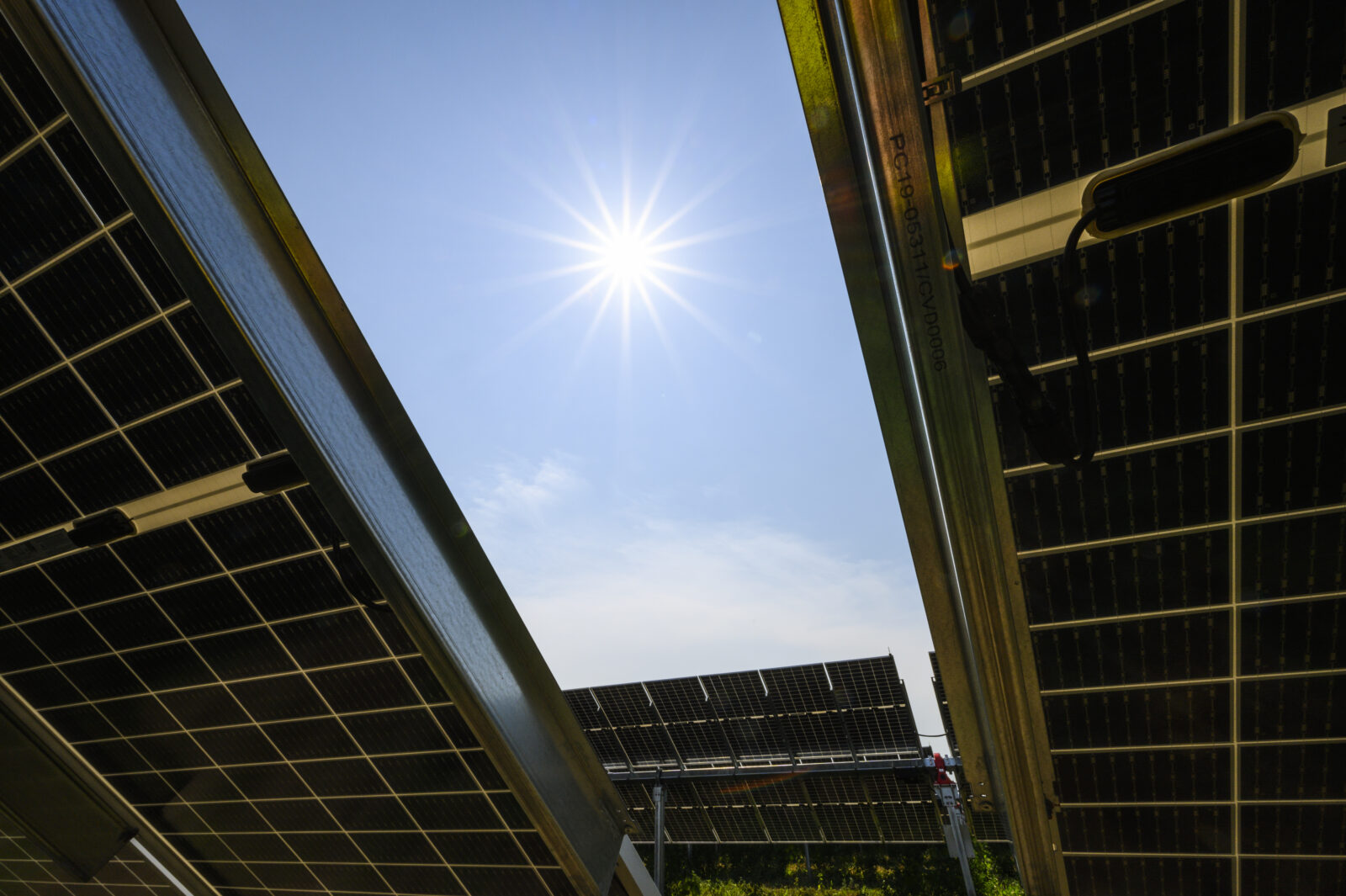
The new Energy Law Clinic — launching in 2027 — will extend that work to one of today’s defining challenges: the future of energy.
Rooted in Tradition
As the energy landscape evolves, legal education must evolve with it.
UW Law’s Energy Law Clinic will place students at the center of one of today’s defining legal and policy challenges. The clinic will expose students to the complex legal and social frameworks shaping the nation’s energy future while giving them hands-on experience researching issues, working with clients and communities, developing solutions and navigating the regulatory process.
Rooted in the Wisconsin Idea and UW Law’s Law-in-Action tradition, the clinic will move beyond classroom study to immerse students in the real-world legal issues driving the energy transition. Law students and graduate students in the Nelson Institute for Environmental Studies’ Energy Analysis and Policy Program will learn together, combining a classroom component focused on energy markets with an experiential component in which they represent stakeholders before the Public Service Commission of Wisconsin (PSC).
“Because energy law sits at the intersection of business, government, technology, environmental policy, tribal sovereignty, agriculture, utilities and economic development, students will gain the interdisciplinary skills and practical experience needed to help shape a more innovative, sustainable and economically vibrant future for Wisconsin and beyond,” Emily Buchholz, associate dean for experiential learning, explained.
“UW Law School has a strong Law-in-Action tradition, where we focus on how law can both lead to social change and is shaped by social change.
We also focus on the ways in which the laws on the books do not necessarily match how law is practiced in real life,” explained Steph Tai, professor of law and associate dean for education and faculty affairs at the Nelson Institute. “This clinic will provide opportunities to see — on the ground — how energy law is affected by real-life concerns, especially the current concerns in Wisconsin with greater energy costs and changes in the landscape due to increased demand for transmission lines.”
Students will work collaboratively on matters involving the PSC, conducting research, consulting with experts, developing policy proposals and advocating for their clients and the communities they serve. Their work could range from intervening in proposals for rate hikes driven by a new data center or a change to how residents are billed for energy to representing landowners, nonprofits, utilities or small local governments on issues affecting their communities.
In each case, students will take a position that provides the PSC with new information that supports their overall knowledge and adds to the record. New information may include research or thought work on macro-economics, community energy burdens, environmental analyses, community cost, etc.
Law. In Action.
The clinic serves the students by providing an opportunity for them to understand the law within a very specific context, Buchholz said, and the connection with the Nelson Institute “gives our students a deeply meaningful chance to engage in interdisciplinary learning and fulfill the Wisconsin Idea at the same time.”
The clinic serves as an opportunity for UW Law to be a leader in a growing area of interest, added Tai.
“We believe it to be the first of its kind, which would be especially fitting since the Public Service Commission of Wisconsin was already the first in the country,” Tai explained. “It would be a model for other law schools as well, given the increasing demand from law students to have practical opportunities in energy law.”
The clinic could also fill an important need for Wisconsin communities, Tai said, by providing research and legal support that some organizations may not otherwise have the resources to pursue.
“The Wisconsin Citizens Utility Board (which does already represent communities before the Public Service Commission of Wisconsin) welcomes further support in their efforts, as it is relatively under-resourced compared to other states,” they said. “Moreover, neither the Public Service Commission of Wisconsin nor the Citizens Utility Board has the capacity to present independent models from those provided by the power companies. Our students can provide that and are eager to do this in service of communities in Wisconsin.”
We Listened
The idea for the clinic began with a question: What could UW Law do to prepare students for the changing energy landscape while serving the needs of Wisconsin communities? The answer emerged following a series of virtual and in-person listening sessions with faculty, staff, alumni and engaged friends of the Law School.
The conversations explored potential opportunities in energy law, as well as possibilities for collaboration with the Nelson Institute, the Wisconsin School of Business and other schools and colleges across campus.
“Here at the Law School, we already have great strength in environmental law, but we were interested in building capacity in energy law — not only a dynamic area of research, but one in which there are many job opportunities for our students and graduates,” explained Dean Dan Tokaji. “I’m especially interested in making sure that our students have the knowledge and skills they’ll need to succeed and lead in this sector.”
Before making new faculty hires through the campus-wide RISE-EARTH initiative, UW Law leadership sought input from alumni and friends — working in and outside of the energy sector — about potential areas of focus.
UW Law Board of Visitors Chair Elizabeth Gracie ’83 was one of the participants. While she doesn’t work in the energy sector, she chose to participate as an observer to get a sense of the possibilities for the clinic.
“I was extremely impressed by the variety of ways that UW Law alumni are working in the energy sector,” she said. “I was further impressed by the number who are committed to sustainability. Sustainability of our energy resources has never been more important.”
Gracie said she appreciated the discussion of what employers are seeking in young lawyers.
“Given the rapid changes in the employment market, this feedback is essential in equipping students for their future practices,” she added.
Those conversations helped shape the direction of the clinic — and showed the idea had support. Among those who heard about the effort were Hugh ’66 and Joyce Bell.

Honoring a Legacy
For Hugh, the opportunity carried a personal significance that stretched back nearly a century.
“This is all about my dad,” he said. “If it wasn’t for him, this wouldn’t be happening, because I wouldn’t have been a lawyer.”
Glen Bell graduated from the Law School in 1927 and went to work for Sanborn, Blake & Aberg (now Bell, Moore & Richter) in Madison that same year.
“He was a really good lawyer and also a great dad,” Hugh said. “He was the reason I went to law school.”
Hugh graduated from the Wisconsin School of Business in 1963. He was in ROTC and was commissioned as an officer and then went right into law school during the Vietnam War. When he finished law school, he went into service.
“A lot of my law classmates went into the Army as lawyers and had at least a four-year commitment. I had a two-year commitment if I went in as an ROTC-commissioned officer,” he explained.
After his two years of service concluded, Hugh went to work in his father’s law firm.
“I considered it a real privilege and enjoyed my time in the service, but I wanted to get back to work — and that meant working with my dad at the law firm,” he said.
Glen joined the firm in 1927 and represented several investor-owned public utilities.
“When I started working for my dad, I was able to get to know all of those companies and the people who ran them,” Hugh said.
“When he retired 10 years later, I assumed their representation.”
The father and son had the privilege of practicing law together during the last 20 years of Glen’s career.
“I don’t doubt that he was as happy as I was that I was able to work with him for those years,” Hugh said. “I considered it a real privilege.”
Glen retired 10 years before he died, but he kept an office at the firm and was consulted regularly by his son and others. “I consulted with him quite often because there was nobody I could have gotten better advice from,” Hugh said.
Collectively, the Bells spent a century at the firm.
“I’m pretty proud of that, and I think he would be, too,” Hugh said.
Now, nearly four decades after his father’s death, Hugh found a way to honor that legacy.
When Hugh heard of the Law School’s desires to start a clinic focused on energy law, he jumped at the opportunity.
“I realized supporting the Law School in establishing this clinic would be an opportunity to do something with my dad, though he died in 1988,” he said. “I wanted to recognize those years that we worked together. I’ve always been looking for a way to have that recognized while supporting the Law School which meant so much to him, and I consider it an incredible privilege to do that now.”
The energy industry the Bells knew has changed dramatically, and the legal questions facing Wisconsin today are changing with it. Hugh hopes his gift ensures students who take part in the clinic become prepared to deal with the issues they’ll encounter in the coming years.
“I hope they prepare students to deal with what is arising as a result of the changes in this industry, which is drastically different from when my dad and I were doing our work,” he continued, adding that he has full confidence in Dean Tokaji and the Law School in doing what’s right for the students.