A History-Making Career on the Bench
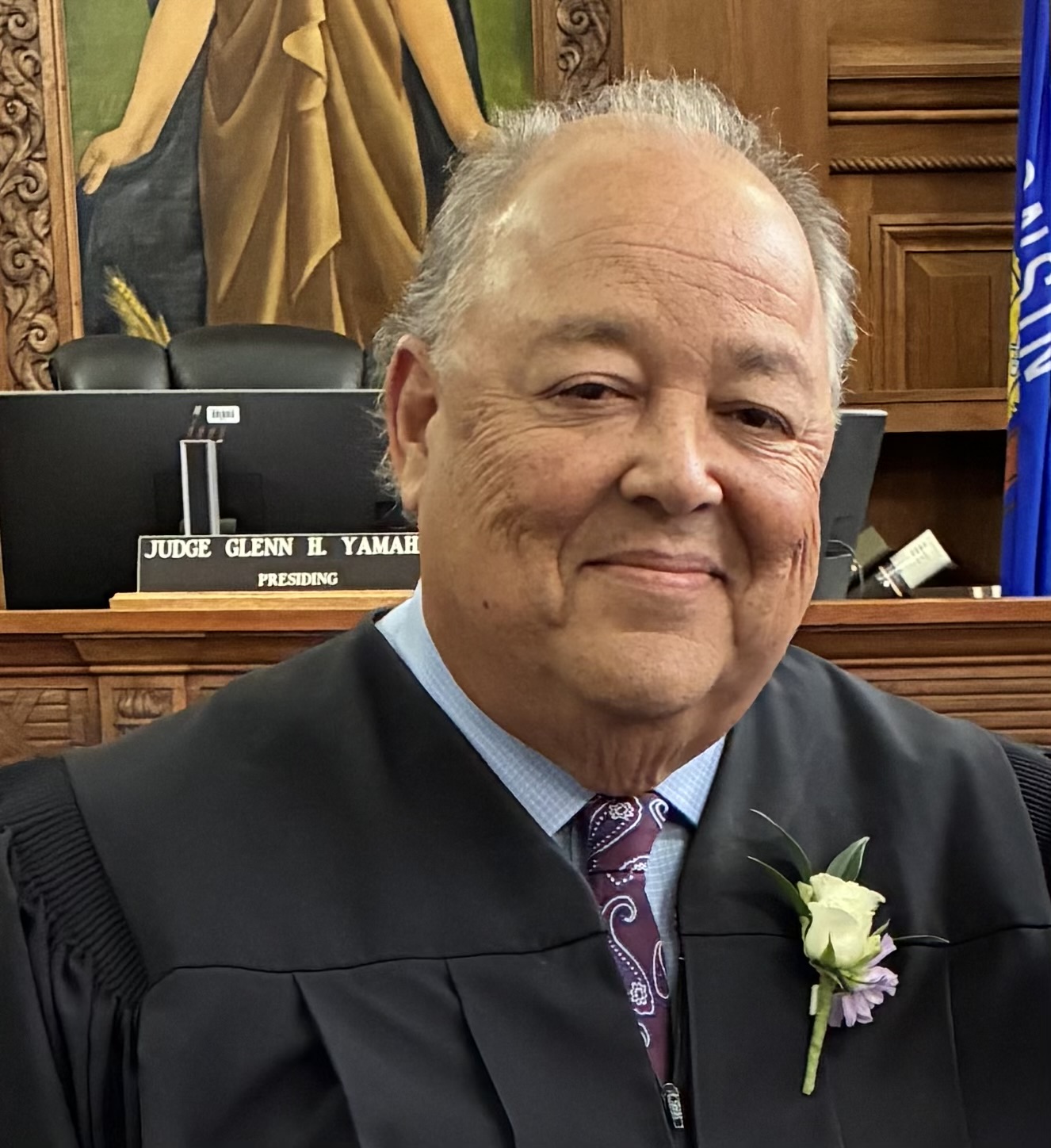
After earning his bachelor’s degree in psychology, Milwaukee County Circuit Court Judge Glenn H. Yamahiro ’91 assumed he’d become a psychologist or teacher.
“I have not necessarily been one of those people who’s in love with the law, as many of my colleagues are, though I respect that,” said Yamahiro, who retired in September after nearly three decades on the bench. “I’m not really a big rules kind of person. My passion has always been more for justice.”
Yamahiro first worked with troubled youth before taking a job in pretrial services at the Milwaukee County Courthouse, which was familiar territory thanks to his father’s job as a parole officer.
Eventually, law school seemed like the next logical step — and University of Wisconsin Law School felt like a natural home.
“It was a very good educational experience,” he said. “UW Law has always been based on law in action, and I think the graduates from UW are ready to enter the legal profession and make an impact because of that.”
After Law School, Yamahiro returned to Milwaukee as a public defender and then went into private practice. He became a court commissioner in 1999 and then made history as the first Asian-American judge in Wisconsin when then-Gov. James Doyle appointed him to the Circuit Court in 2003. Voters reelected him for four consecutive terms.
During Yamahiro’s judicial career, he presided over criminal, civil and specialized courts, including drug treatment and veteran courts.
“UW Law has always been based on law in action, and I think the graduates from UW are ready to enter the legal profession and make an impact because of that.”
He took a particular interest in domestic violence advocacy, inspired by his experiences working with victims as a shelter volunteer. He later served on the faculty of the National Institute on Domestic Violence to educate other judges on domestic violence issues, work he plans to continue in retirement.
There were moments in court where Yamahiro felt lives were saved. But the gratifying times came alongside challenges, including a two-year stint hearing sexual assault and homicide cases.
“You experience a lot of vicarious traumas when you listen to homicide and sexual assault all day long, every week,” he said.
But he’s proud of the impact he has made through the profession he never expected to pursue. Between his father’s career, his sister’s work as a Milwaukee Public Schools social worker and his own time at the courthouse, Yamahiro’s family has served the Milwaukee community for more than 90 years combined.
“I view my service more in a family context, a family legacy of service to Milwaukee,” he said.
Now that Yamahiro is hanging up his robe, he is eager to spend more time with his family, on self-care, enjoying the outdoors and continuing his advocacy work.
His advice to fellow alumni: “Use law to continue to make an impact and to better society.”
By Nicole Sweeney Etter