Camille Townsend Granville ’06
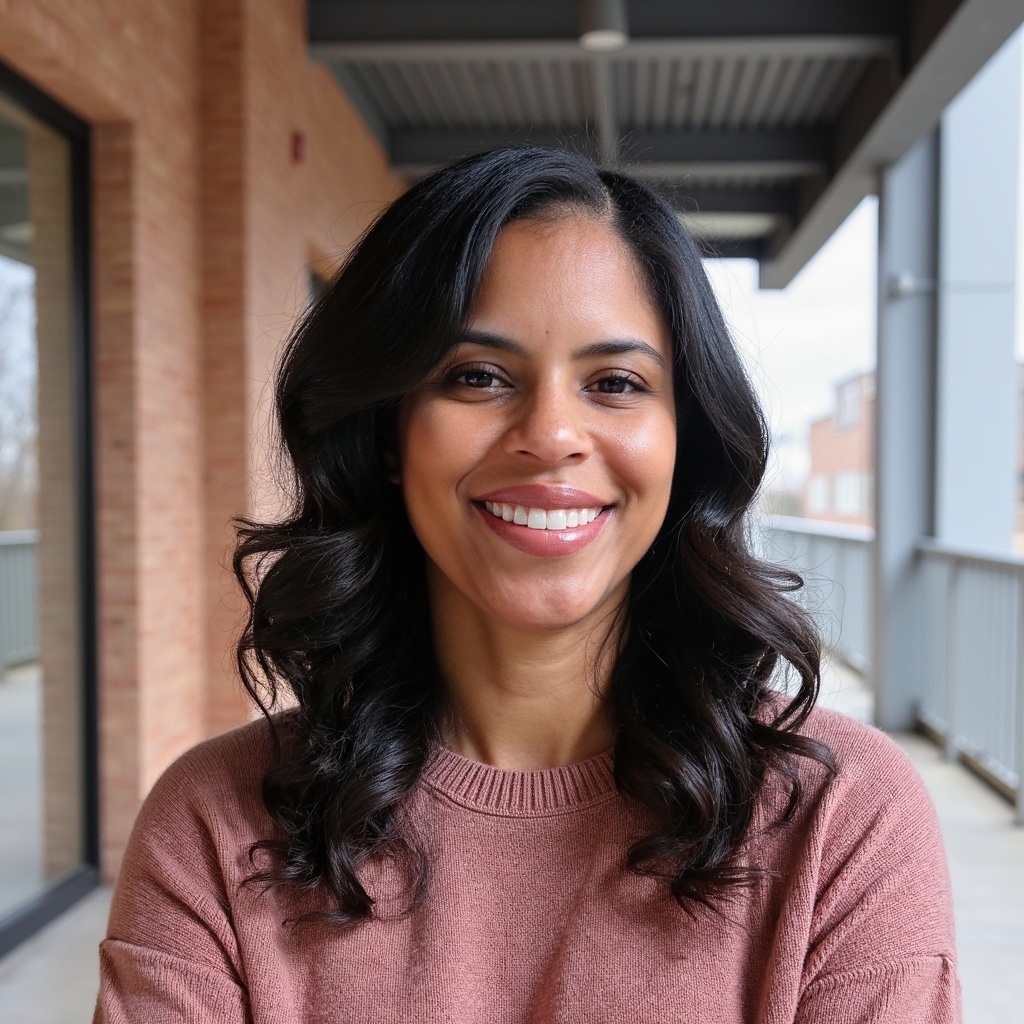
Camille Townsend Granville ’06 is chief ethics officer and associate general counsel at Airbnb. A lawyer for more than 20 years, she previously served as assistant county counsel for Los Angeles County, overseeing a 17-attorney labor and employment division.
She is a nationally recognized leader and community advocate, honored as a Vanguard Award recipient and National Bar Association 40 Under 40 awardee, among others. She also received the Bruce F. Beilfuss Memorial Award for service to the University of Wisconsin Law School community. She has held numerous bar and nonprofit leader-ship roles and currently serves on boards focused on advancing inclusion in the legal profession.
Question: After graduating from UW Law, you began your legal career in private practice before moving into public sector work and eventually in-house counsel at Airbnb. Looking back, what motivated those transitions early on, and how did each step contribute to the skills you rely on most today?
Answer: My career path has always been driven by an internal compass — a calling toward new challenges, growth and the chance to contribute in a meaningful way. It was never a matter of running from a role but rather running toward development. As I matured in my legal practice, I realized I wanted a role where I could think more creatively, operate in a fast-paced environment and use my abilities to their fullest potential, which led me to in-house counsel at Airbnb.
Each professional chapter proved to be an invaluable preparation. My time in private practice instilled a rigorous discipline and a resilience that I carry with me today. My public sector work with Los Angeles County taught me to be nimble, think holistically and truly embrace the role of a client-centric partner. It was about how I practiced law with the agency’s needs and goals front and center. It was also where I first gained experience in people management, leading large teams.
All of these experiences — the rigor, the agility and the focus on partnership — have prepared me to lead and serve effectively here at Airbnb.
Q: You’ve spoken about the importance of inclusive pipeline work. Why do you think representation — in law and beyond — matters, both in hiring and in leadership development?
A: I view inclusion and representation as foundational cornerstones, not just for the legal profession but for any field seeking to innovate and thrive. Furthermore, supporting others on their journey through mentorship and pipeline work is, for me, a genuine life’s calling. I feel compelled to go the extra mile and respond to every request for help, because someone once did that for me. Paying that forward isn’t just a responsibility; it’s essential to building a stronger, more inclusive community.
To directly answer your question, inclusion matters because our world is inherently diverse, and when we find common ground and elevate one another, we unlock an incredible power. That is what makes our communities and our workplaces richer and stronger — particularly in law, where understanding a wide array of perspectives is critical. Inclusion in hiring and leadership creates a profound ripple effect: it doesn’t just open a door for one person; it inspires countless others to do the same. Ultimately, we all win when we commit to inclusivity in our work.
Q: What’s one professional setback that ended up teaching you something critical — and how did it influence your career?
A: I’ve been fortunate to have a career full of both successes and valuable lessons. Every role, story, misstep and disappointment has taught me something, reinforcing my commitment to being a lifelong learner. Change is constant, and our growth must be constant alongside it.
A key moment of learning for me occurred in a past life, long before Airbnb, when I was not selected for a promotion. Looking back, I realized I simply wasn’t ready — even though I felt I was at the time — and there was still growth ahead of me. While the disappointment was real, it taught me the critical importance of self-awareness. It pushed me to reflect deeply on what I truly wanted out of my career and what the right next step actually looked like.
That clarity helped align me with the opportunities that followed. Had I taken that role, I wouldn’t be where I am today. It was a reminder that when one door closes, another, better-suited one is preparing to open.
Q: Looking ahead, what challenges or opportunities in the intersection of law and tech excite you most?
A: We are only at the very beginning of understanding how Artificial Intelligence (AI) will shape the personnel space — the area where I work — in the coming decade. I am both excited and a little awed by the possibilities. Imagine using AI to help us spot and reduce unconscious bias in hiring, or to ensure that a company is sourcing the best candidates from the widest and most inclusive pool possible. That potential for positive impact is thrilling.
At the same time, we must thoughtfully address the big questions around data privacy, transparency and the responsible, ethical deployment of these technologies. What excites me most is the chance to build systems that are simultaneously innovative and ethical. There is a real opportunity for law and tech to work together, creating frameworks that encourage progress while still being protective of people.
I look forward to being part of that conversation, ensuring AI is a force for good in how we develop and support people at work, and demonstrating how thoughtful legal guidance can make a real difference in this complex landscape.
Q: How do you want your work to be remembered or to influence the next generation of lawyers?
A: While my professional contributions are just one part of my identity, I hope to be remembered, first and foremost, as a good teammate and a genuinely good person. I want people to think of me as someone who was kind, supportive and maybe even a little bit quirky in my own way.
I believe it is vital to make others feel seen, valued and encouraged — to be the kind of colleague, friend and leader who consistently lifts people up. Ultimately, I’d love for my influence to extend beyond just legal work. I aspire to be remembered as a great mother, a loyal friend and someone who left people with the same sense of belonging and positivity that I strive to find in others every day. If I can achieve that, I will be proud of the legacy I’ve contributed to the next generation of lawyers and to everyone around me.
Q: What experiences at UW Law have continued to influence how you approach your work today?
A: The school’s broad and flexible curriculum gave me a strong foundation, teaching me to think critically across different areas of law — a skill that is invaluable when navigating the novel challenges of a complex, global environment like Airbnb.
But honestly, what has stayed with me most are the deep connections and powerful support system I found there. Whether it was the Black Law Students Association (BLSA) or my professors, I always felt there were people genuinely rooting for me.
Professors like Bill Whitford and Jim Jones made a lasting impression, not just with their legal expertise, but with their heartfelt encouragement. I still vividly recall Professor Whitford, hands in his front jean pockets, offering me life advice in the hallway about confidence and living on my own terms, and always making me laugh. And Professor Jones with his powerful words: “Go after it and don’t you stop until you get it!”
Those quiet moments of support and belief have stuck with me across the decades. In my work to-day, I consciously try to carry that same spirit of support, whether I’m leading a team, mentoring or collaborating with stakeholders.
Those soft skills and quiet acts of kindness are the true guides for how I lead and live, no matter how complex the work gets.
Q: During your time at UW Law, were there courses, clinics, professors or experiences that shaped your interests — or that you now see as foreshadowing your later career focus?
A: I credit Professor David Schwartz, who taught labor and employment while I was at UW Law, with igniting my passion for employment law. His teaching style was so engaging and relatable; he truly brought the material to life in a way that made me want to dive deeper.
The cases and assignments he chose weren’t merely academic exercises — they laid the crucial groundwork for the real-world issues I would dedicate my career to. What really stood out was his teaching style, which was always rooted in kindness, coupled with practical advice.
I remember Professor Schwartz reminding us that, in the real world, so much of our work comes down to the basics of writing briefs and points and authorities, just like his assignments. He encouraged us to stay calm and steady, which has been a valuable anchor for me ever since.
Q: If you could give your younger self — or a current student — one piece of career advice, what would it be?
A: Have profound confidence in yourself, but anchor it with humility. The legal profession can be challenging and sometimes intimidating, but you truly never know when your breakthrough is just on the other side of that wall. Never give up. You must live bravely and keep pushing forward, especially when things get tough.
Interview by Kassandra Tuten