In Howie We ‘Trust’
How beloved is Howard (Howie) Erlanger ’81 by the University of Wisconsin Law School community?
The Emeritus Voss-Bascom Professor of Law has won the Teacher of the Year Award a record six times, including once after he “retired” in 2013.
On his last day of teaching — Dec. 2, 2025 — his students were drawn back to class after they were released early, just so they could tearfully bid him farewell during a celebration orchestrated by the deans.
As Dean Dan Tokaji put it, “Howie’s exodus from teaching is his idea, not mine.”
And not surprisingly, every faculty member and former student who was emailed for this story responded within minutes in an outpouring of adoration.
Erlanger has taught Trusts & Estates (T & E) to generations of UW Law students for over four decades. He has been teaching at UW even longer, having arrived in the sociology department in 1971 with a Ph.D. from University of California, Berkeley.
The 81-year-old’s career has been remarkable, driven by a commitment to making a difference and solving problems in an engaging way.
His legacy lives on in every student he cared for and invested in. It has been his calling.
Early Influences
Erlanger became interested in law from a fairly young age. His parents, deeply affected by the Holocaust, rebuilt their lives in the United States; his father was a lawyer, so he grew up with a concern for justice and fair treatment. Politics and social justice were frequent topics of dinner table conversation.
“I was 9 years old when Brown v. Board of Education was decided, and I remember my father proudly announcing that ‘segregation is over;’ then, some years later, I realized that it wasn’t,” he said, identifying this as the moment that he became interested in “law in action” — how law operates on the ground.
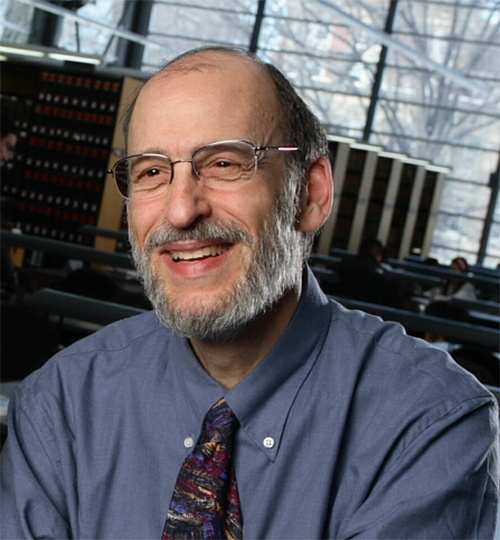
In high school, Erlanger realized he wanted to teach and had a knack for it.
“I discovered that I was good at taking complex concepts and explaining them to others,” he said. “I found I made a lot of friends by getting them through geometry. That’s where it all started.”
Sociology ended up being Erlanger’s path to both law and teaching.
When he was an undergraduate student at Berkeley dating his now-wife Pam, they took a sociology class together; he learned about “this big new field called the sociology of law” and was invited to stay and get his Ph.D. in sociology to pursue it.
In 1971, he moved with Pam and their two young children to Wisconsin because UW, like Berkeley, was considered a leader in this emerging area.
After he earned tenure in UW’s sociology department, Erlanger got permission to go to law school part-time because he wanted to “complete the cycle.” He joked that “in those days I didn’t need much sleep.”
He graduated first in his J.D. class in 1981 and was recruited to teach at UW Law that year. Fun fact: He took Trusts & Estates pass/fail.
“They said, ‘There’s only one way we add you to the faculty. Nobody wants to teach Trusts & Estates, but it’s essentially a required course.’ So would I agree to teach it for my entire career? They wanted a promise. I said, ‘I think Trusts & Estates is really interesting and has a strong law in action component; both are things that students need to know about. I’ll take the deal.'”
Practical Yet Inspiring
Erlanger’s approach to T & E comes from being “very practical:” Teaching a framework about how to practice law with regard to what lawyers actually do.
“Legal education is very litigation-focused,” he said. “Everything that is taught via the case method is correct and important, but it’s overweighted. Most lawyers don’t litigate; they solve problems. Traditionally, law is taught top-down; you start with the rules and work from there. I try to teach bottom-up; you identify the problem and then plan and draft to solve it, in the context of the rules.”
He explained why the subject matter of his course has been so important.
“I like to say that, other than parking and speeding tickets, it’s people’s most frequent encounter with the law,” he said. “I tell them the first day, maybe you’re young enough that you don’t think about dying, and that’s great. But you’ve got parents, you’ve got grandparents; as you get on in life, you’ll see that everybody is impacted by this. And people assume that a lawyer knows something about it. People will ask you questions, so you’re going to be ‘practicing trusts and estates’ whether you think you are or not.”
Of course, some students found their careers in this kind of work.
Greg Monday ’93, an attorney at Reinhart in Madison helping middle-market family businesses with succession and other matters, said Erlanger taught him very specific things to help him early in his career.
“But his most important influence on me was his optimism and his natural instinct to help everyone around him,” Monday said. “Howie inspired me to think that there may be a place for peace, love and understanding in the practice of law. And I think I found that. Howie is a truly good person. He inspired me by being thoughtful and cheerful and funny and kind.”
Monday, who has taken on Business Organizations as an adjunct professor in the past, said, “When I’m preparing to teach, I always think, ‘How would Howie teach this?'”
Wes Taylor ’09, an attorney at Foley & Lardner LLP in Madison and also an adjunct professor at UW Law, called Erlanger “custom-made” to be his teacher.
“I found my best professors were role models,” Taylor said. “When I found someone I respected, I was like ‘I want to be like that. If this is the kind of person who works in this area, this is the area I want to work in.’ He showed me a path to being the kind of lawyer I wanted to be.”
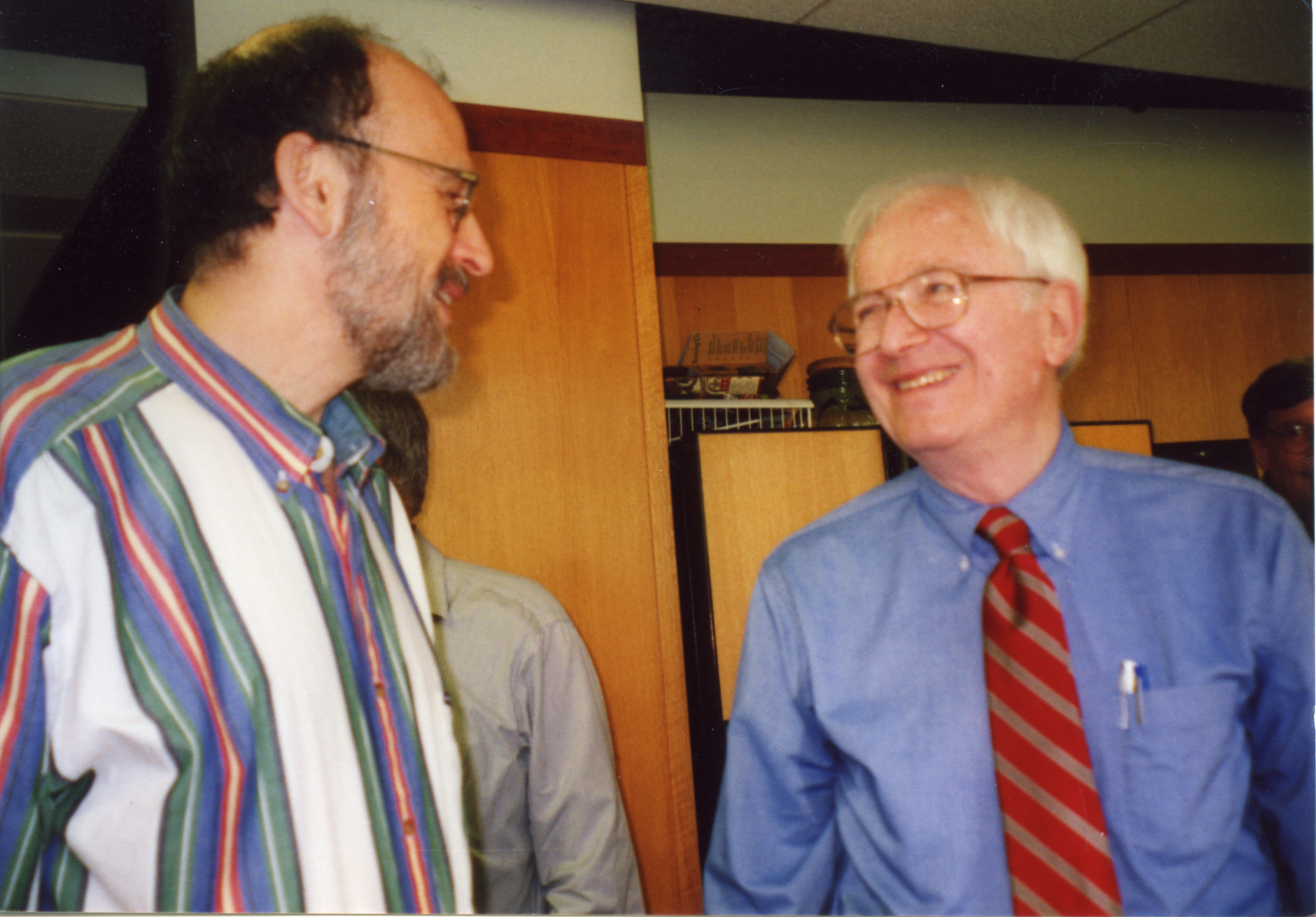
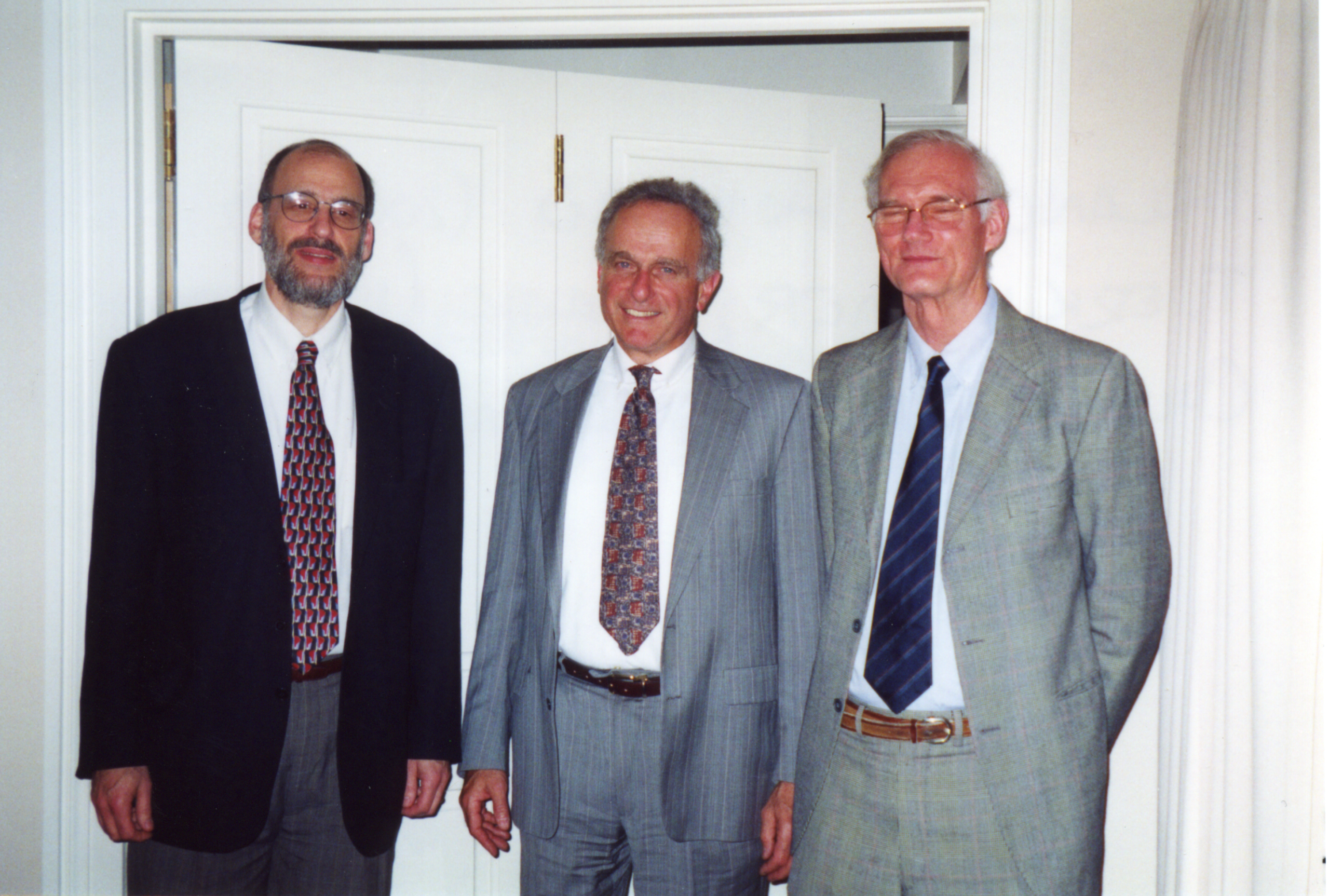
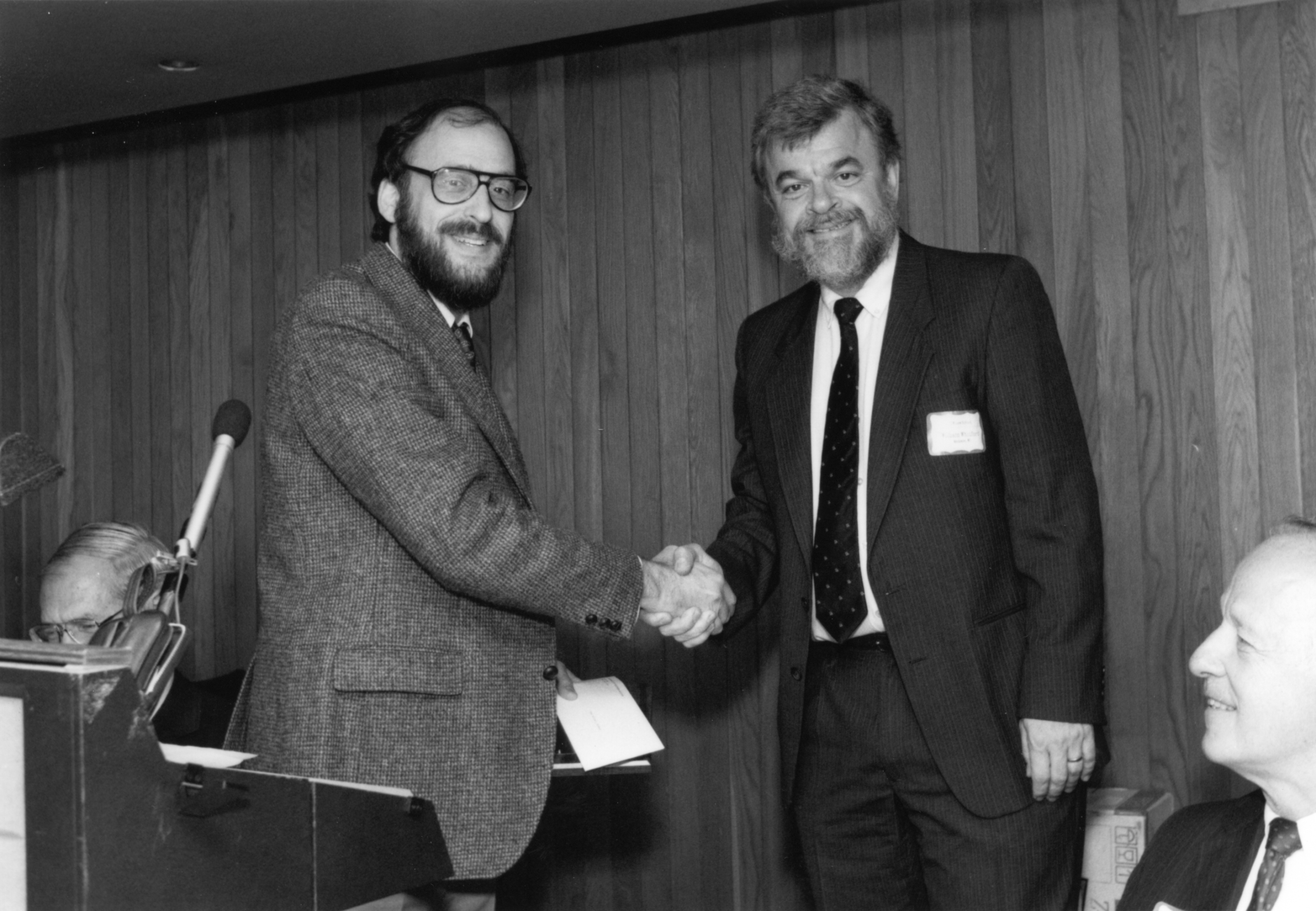
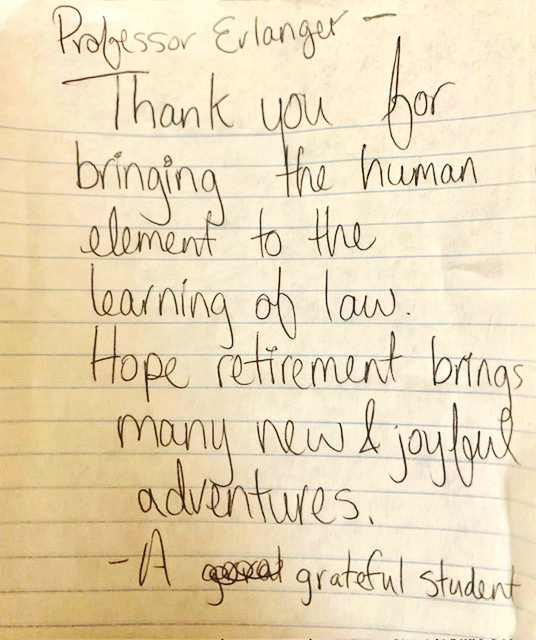
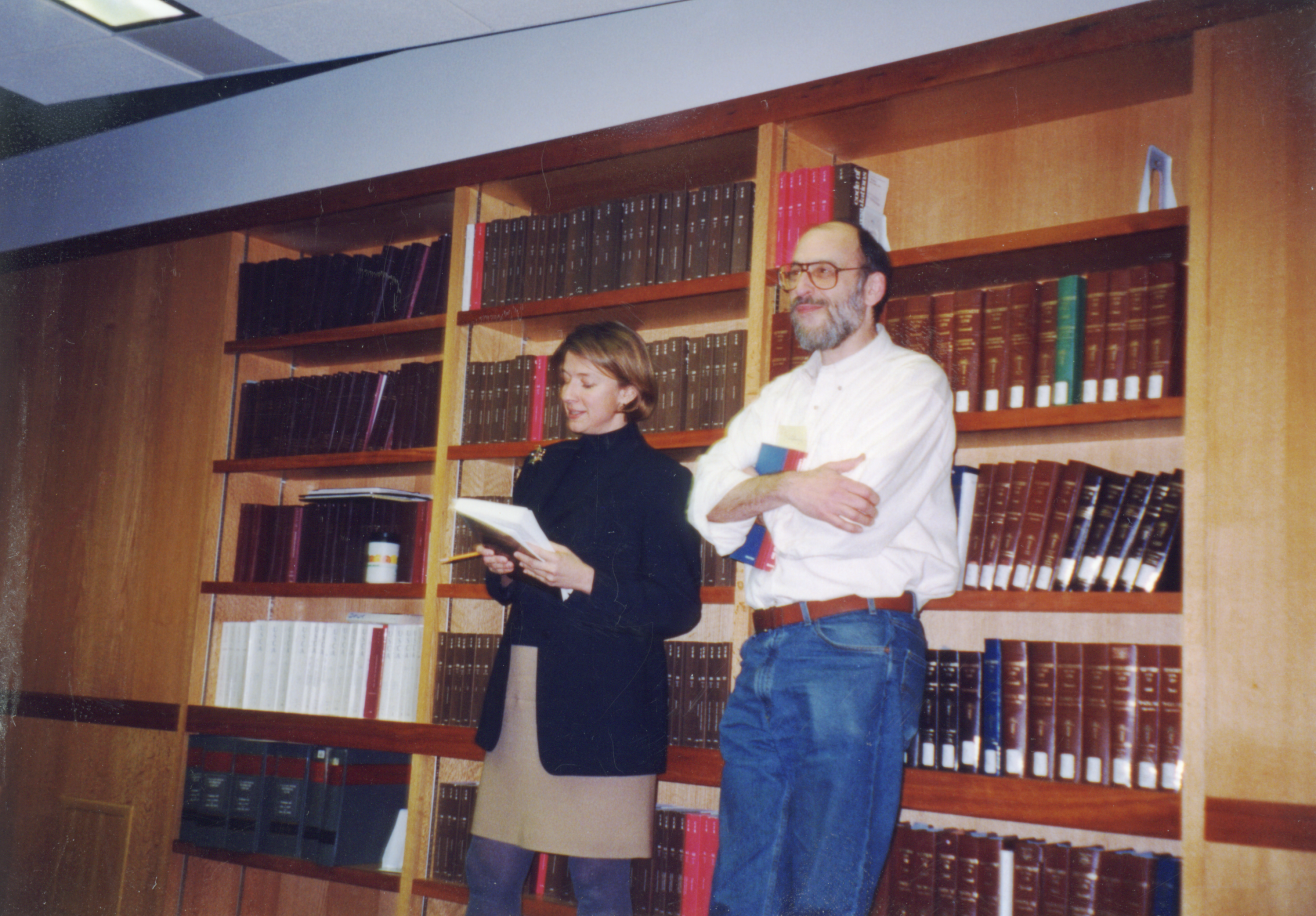
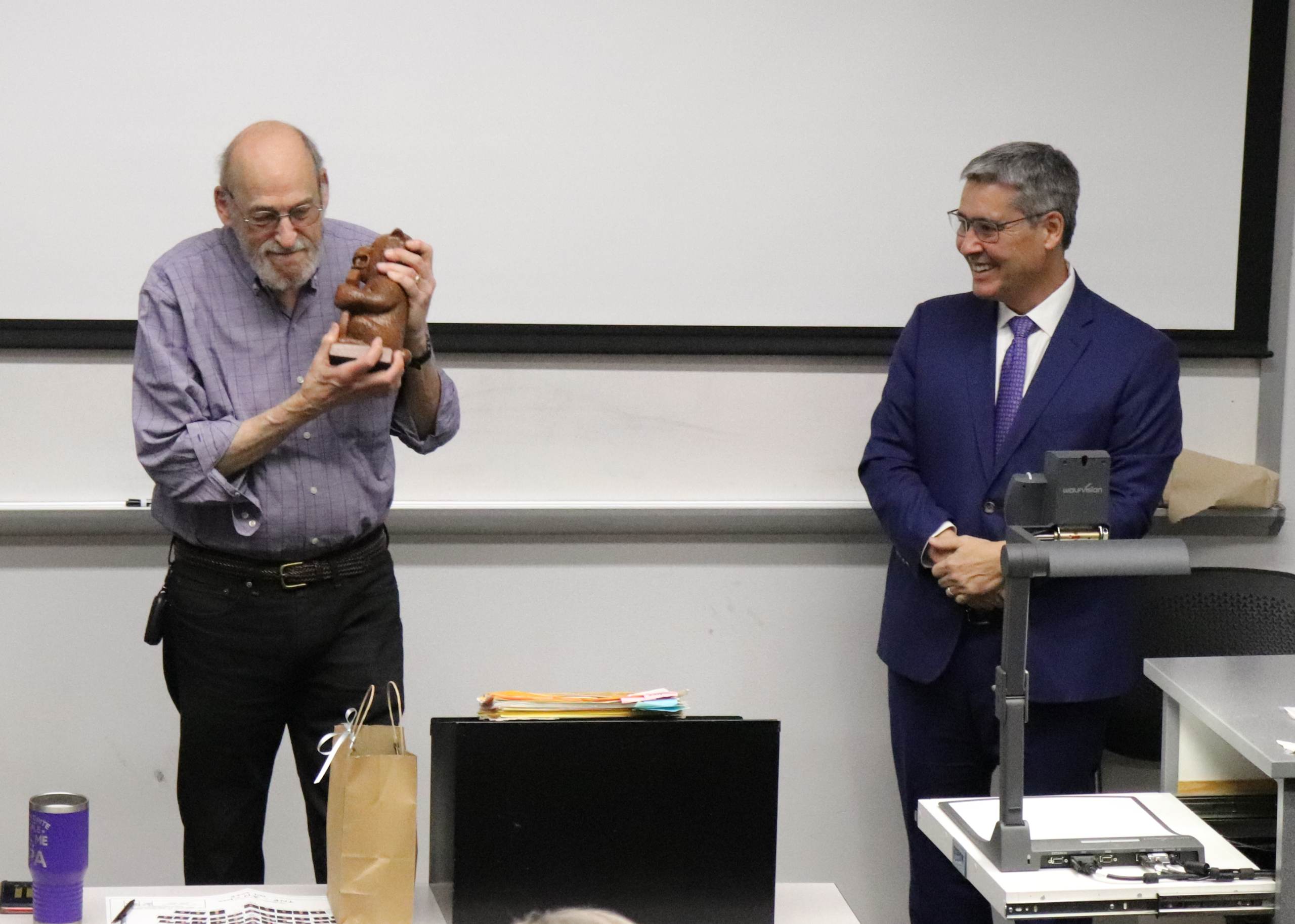
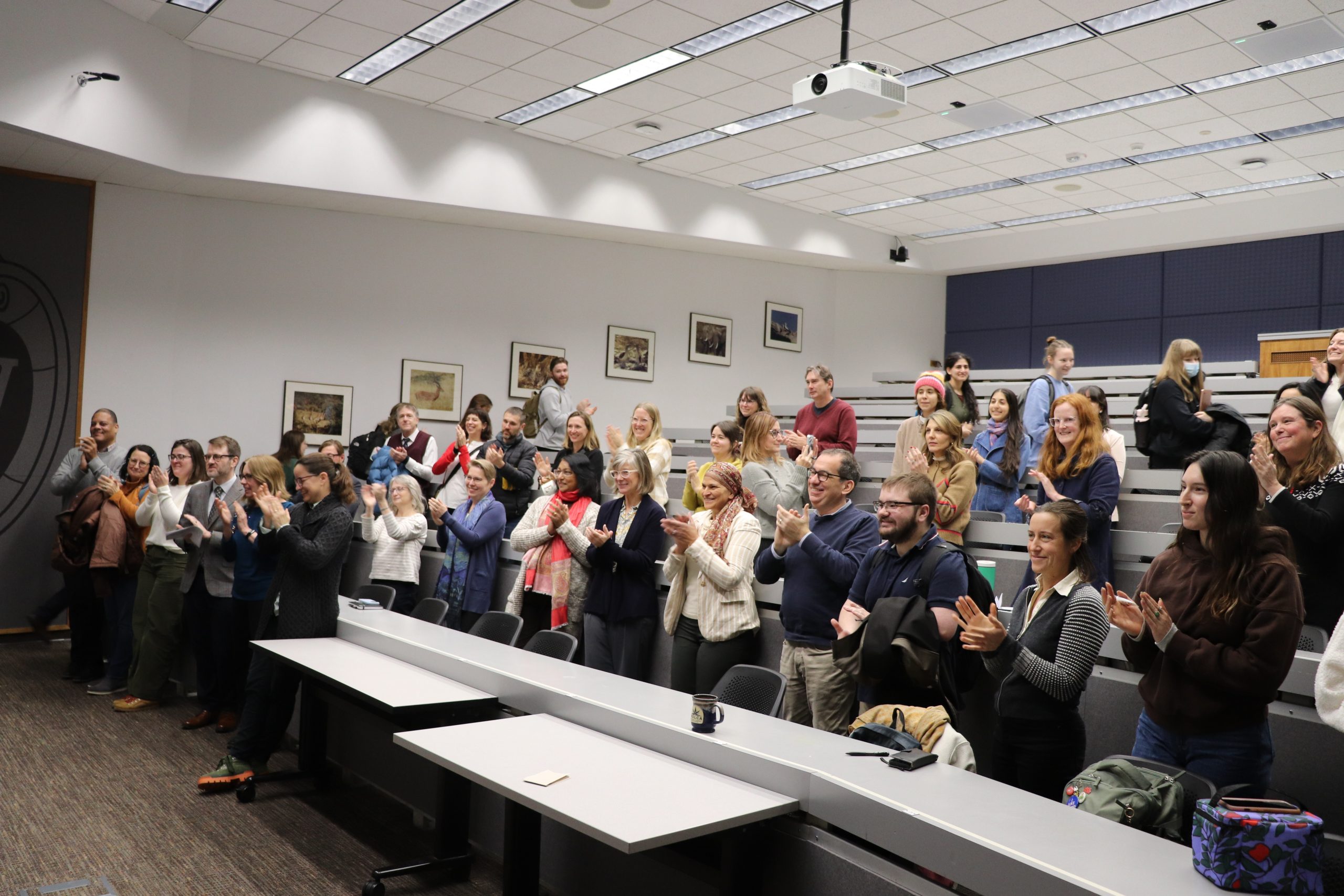
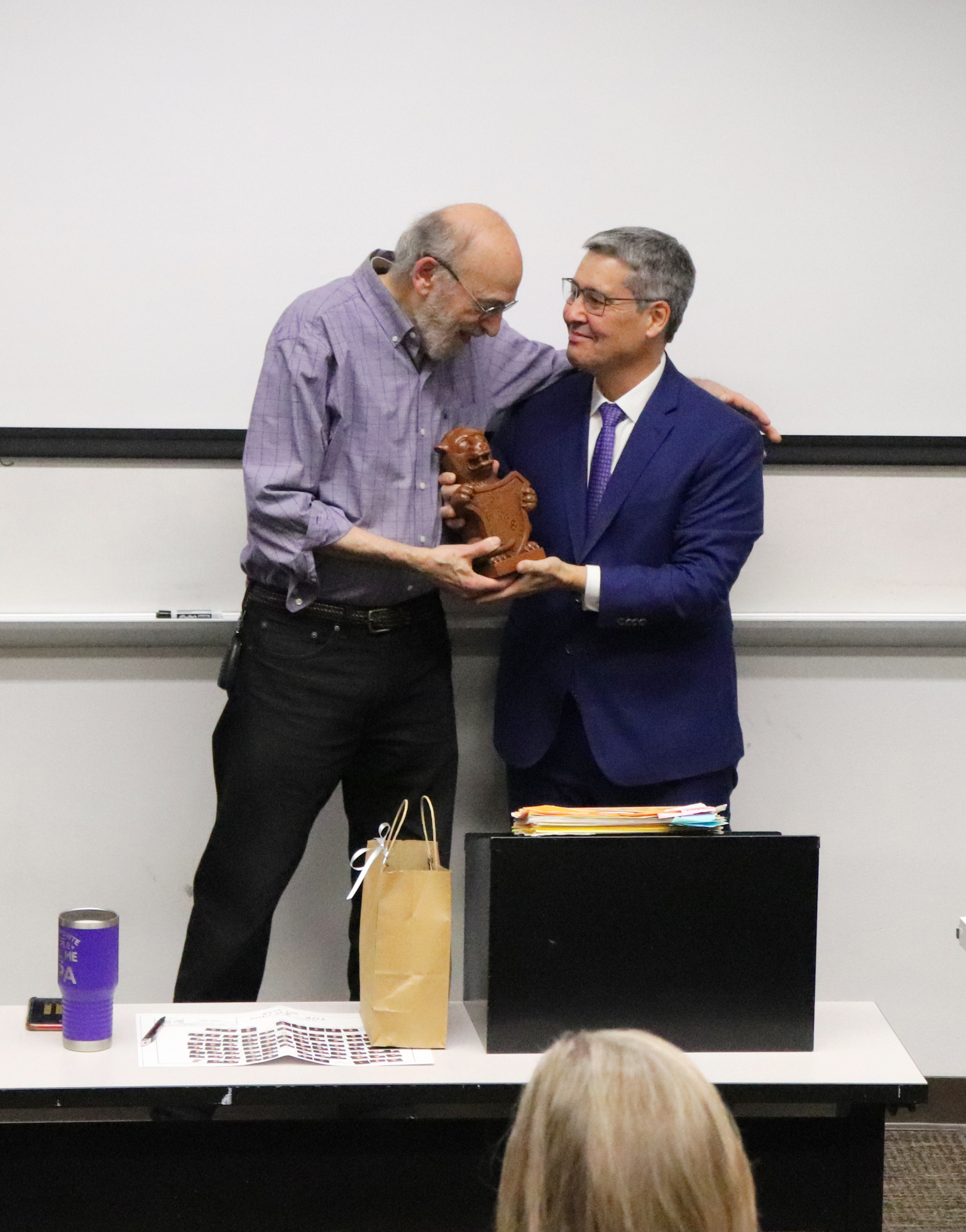
From left to right, starting on top row: Erlanger with Stewart Macaulay in 2001; UW Law Teacher of the Year Award winners together, from left: Erlanger (2000), Frank Tuerkheimer (1999) and Larry Church (1998); UW Law Teacher of the Year Award winners together, from left: Erlanger (1989) and Bill Whitford (1990); a note from a student on Howard Erlanger’s last day of teaching in 2025; Erlanger with Jane Larson in 1999; Erlanger holding a gargoyle statue alongside Dean Dan Tokaji on his last day of teaching last semester; students, faculty and staff celebrating Erlanger in the classroom after his final class; Erlanger receiving Gargoyle statue from Dean Dan Tokaji.
Repairing the World
Erlanger said he is guided by a foundational Jewish principle: Tikkun Olam, Hebrew for “repair the world.”
“You’re here with an obligation to leave it a better place, and that’s been a guiding principle for me,” he said. “It’s important for me to make a difference.”
This is another reason UW Law has been a great fit for Erlanger. The Wisconsin Idea has always meant a lot to him.
Recently, Erlanger helped his friend and fellow emeritus professor, Stewart Macaulay, create the Jackie Macaulay Fellowship Fund to support law students pursuing public interest summer internships and associate unpaid positions. And Erlanger has started a matching effort to further support this important work.
“You’re here with an obligation to leave it a better place, and that’s been a guiding principle for me. It’s important for me to make a difference.”
And in the 1990s, he helped lead a revamp of the Wisconsin Probate Code.
“At that point I had taught T&E for 10 to 15 years and could see issues where the code could be modernized,” he said.
Essentially, the “nonprobate revolution” was a shift away from court-supervised probate for passing assets at death in favor of faster, cheaper, private alternatives like beneficiary designations, trusts and joint accounts. But so many of the rules were just for probate.
“It was a problem to solve,” he said. “Can’t we have one set of rules for passing property at death?”
He said he, too, benefited from the revision process by learning from practitioners and consumers.
“It was valuable for me to see their perspective of these rules and how things are working in the real world,” he said.
Teaching the Teachers

Many students fondly remember Erlanger’s playful approach to teaching because of the cartoons and other clips he included in his course materials.
His fellow faculty appreciated “the Aardvarks.” (Because teaching is aard-vark (hard work)!)
Erlanger wanted to mentor and collaborate with other professors but found that “people won’t come to a study group on teaching” unless you have a fun name.
These gatherings tackled everything from navigating controversial topics to dealing with negative teaching evaluations.
Evjue-Bascom Professor of Law Mitra Sharafi called Erlanger an amazing teacher and mentor who has had a profound influence on the faculty’s culture.
“When I was a brand new professor in 2007, he emphasized the importance of showing up for job talks and faculty workshops — that I should always read the pre-circulated paper and try to ask a question, and that it was possible to be rigorous and generous at the same time,” Sharafi said. “This was what it meant to be a part of our scholarly community. That has stuck with me ever since, at UW and at scholarly events I am part of elsewhere, too.”
Asifa Quraishi-Landes, a professor who specializes in comparative Islamic and U.S. constitutional law, chose Erlanger to be her mentor when she arrived at UW Law in 2000 because he was also from California and “of course he was his charming self” when he ran into her parents when they were visiting.
“I knew Howie was the guy. I don’t do T & E, so I knew nothing about his field, but I knew he had the kind of connectivity with people that I could rely on,” Quraishi-Landes said. “I could be real with him.”
She became closer to Erlanger and his wife when she learned her daughter had some serious special needs. Pam, then an occupational therapist specializing in pediatrics, ended up as her daughter’s therapist.
“I owe Howie and Pam both so much,” Quraishi-Landes said. “Howie has been my first person to go to for career advice, teaching advice, tenure advice and just life advice — like how to balance a career with raising a special needs child.”
The Erlangers’ son, Jeff, became a quadriplegic shortly after birth; he lived a rich life until his passing in 2007. Among other accomplishments, many people know of him because of his iconic appearance on “Mr. Roger’s Neighborhood” in 1981, memorialized in the documentary “Won’t You Be My Neighbor?.”
Their other child, Lisa, is a clinical professor of medicine and social activist.
Quraishi-Landes said being featured in a 2009 Gargoyle magazine along with Erlanger was the honor of her career. “It’s centered on my office wall,” she said. “I’m so grateful to know you and to have learned from you,” she told him on his last day of teaching.
Next Chapter
While he is no longer in the classroom, Erlanger said he will miss the students but plans to stay involved in the Law School community as well as in associations like Law & Society, where he has been active for many years.
“I have strived to be a teacher and mentor,” he said. “I feel very good that people think it worked.”
Now he is turning more to his involvement with community organizations, to help them with operations and fundraising.
“My work is my hobby,” he said. “That is what has been so great about being a faculty member here. I don’t think I could have done what I did anywhere else. Now I get the pleasure of working with these nonprofits.”
Howie’s Path at UW
- 1971 – Started teaching sociology at University of Wisconsin
- 1981 – Earned his J.D. at UW Law
- 1982 – Started as review section editor of Law and Social Inquiry; he is still serving in this role in 2026
- 1989 – Chosen for Teacher of the Year Award at UW Law for the first time
- 1993 – Received the Emil Steiger Award for Distinguished Teaching from UW–Madison
- 1993 – Became an academic fellow at the American College of Trust and Estate Counsel
- 1995 – Chosen for Teacher of the Year Award at UW Law for the second time
- 1998-2013 – Served as director of the Institute for Legal Studies at the Law School
- 1999 – Wisconsin Probate Code revisions led by Erlanger took effect
- 2000 – Chosen for Teacher of the Year Award at UW Law for the third time
- 2001 – First J. Willard Hurst Summer Institute in Legal History, which he helped found
- 2003-05 – Served as president of the Law & Society Association
- 2004 – Received the Underkofler Excellence in Teaching Award from UW System
- 2006 – Chosen for Teacher of the Year Award at UW Law for the fourth time
- 2007-2013 – Served as director of the Center for Law, Society, and Justice in the College of Letters and Science
- 2008 – Chosen as faculty speaker for UW Law Hooding Ceremony
- 2010 – Received the Stan Wheeler Mentorship Award from the Law & Society Association
- 2011 – Chosen for Teacher of the Year Award at UW Law for the fifth time
- 2013 – “Retired” but continued to teach classes
- 2019 – Chosen for Teacher of the Year Award at UW Law for the sixth time
- 2020 – Chosen as faculty speaker for Law School’s virtual Hooding Ceremony
- 2020 – Received the Ronald Pipkin Service Award from Law & Society Association
- 2025 – Taught his last class
By Jennie Broecker and illustrations by Mike Bass