Navigating the Gray

All work is semi-autobiographical. So it makes sense that Joshua Braver, who had a rebellious streak in junior high, would explore the idea of rule-breaking in his scholarship.
“As a teenager, I thought an unjust rule should be violated as quickly as possible,” said Braver, an assistant professor of law at University of Wisconsin Law School. “But as I matured, I realized that you had to be careful about how you fix an unjust rule so that you don’t accidentally create chaos or even more injustice. My work explores how can you violate law in the least dangerous and most responsible way.”
In 2023, Braver wrote “We, the Mediated People: Popular Constitution-Making in Contemporary South America,” published by Oxford University Press, in which he examined the perils and promises of illegal constitution-making by “the people.”
This summer, he published “Disobeying Lawful But Unethical Orders in the Army.”
“This paper examines three competing answers to the question of when an officer should disobey a lawful but unethical order — unethical in the sense that it violates their professional responsibilities,” explained Braver. “Peter Feaver says ‘never.’ Samuel Huntington says there is no clear answer. General Mark Milley says ‘always.’”
Each of these positions is unsatisfactory, he said.
“Huntington leaves us in despair. Feaver and Milley, by contrast, are too absolutist — each failing to adequately account for the difficult task of balancing two vital imperatives: preserving civilian control of the military and preventing civilian misuse of the military,” he continued.
Braver’s aim has been to “suggest how such disobedience might be guided in a way that intrudes upon civilian control as minimally as possible.”
“I do not offer a solution from first principles but offer guidance for those who already accept the premise that disobedience is, at times, an unfortunate necessity,” he said.
The Delicate Art of Principled Disobedience
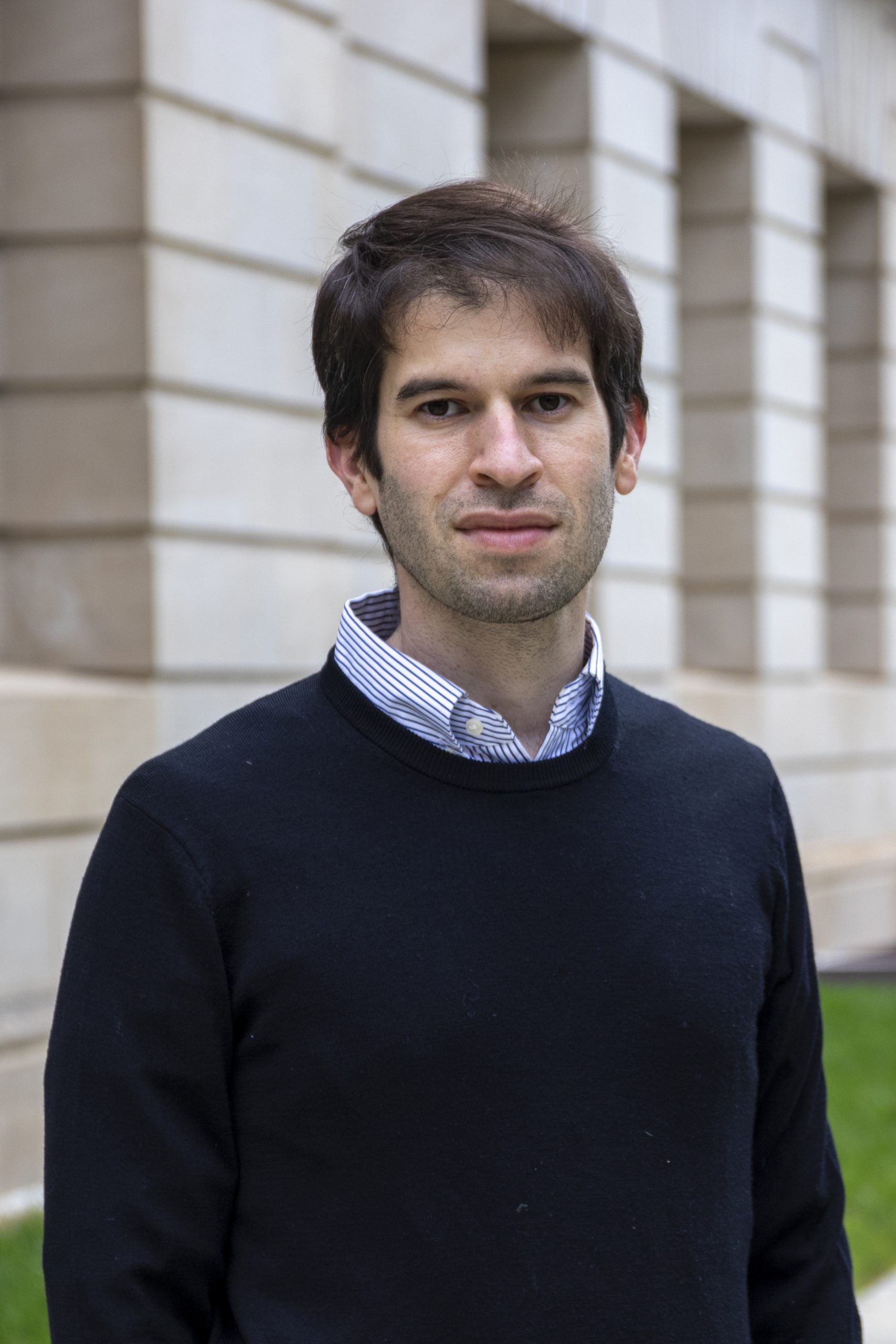
In the below Q&A, Braver discusses his research, the delicate art of principled disobedience within legal and ethical frameworks, and how the tension between legal authority and moral legitimacy threads through both projects.
Question: What inspired you to explore the ethics of disobedience within the military context?
Answer: In the Summer of 2020, it looked like President Donald Trump would invoke the Insurrection Act to send in armed forces to put down riots in D.C. and perhaps elsewhere. Former Chairman of the Joint Chiefs of Staff Mark Milley opposed it and released a memo to his troops that seemed to imply they should disobey the orders.
In the memo, he reminded personnel that they took an oath to defend the Constitution of the United States, which, he noted, included protecting the American people’s right to freedom of speech and peaceful assembly. It baffled me. Yes, disobey illegal orders I get, but how could someone in that position imply that troops should disobey a lawful order? And that somehow a lawful order could violate an oath to the Constitution?
I was curious about what that meant and how various codes of ethics were viewed in the Armed Services.
Q: Both in your book and in your paper, you revisit classic questions: Who are ‘the people?’ When must law yield to ethics? — but ground them in urgent contexts. How does this blending of normative theory and real-world urgency shape your approach as a professor and scholar?
A: In my work, I dive into the real world. I look into things like memos and debates and I interview people who actually struggle with these issues; people who have good intuitions about right and wrong but don’t always have the time and opportunity to systematically develop their intuitions.
To me, interviewing real people impacted by these concepts gives the work a kind of plausibility, a texture and buy-in from those individuals and hopefully helps provide them with guidance for future action.
Q: What have you learned personally through researching and writing this paper? Has it changed how you view authority, ethics or your own professional responsibilities?
A: I learned so much about the Armed Services. For example, I had no idea how deep their understanding of professional ethics was. I came away impressed by their dedication, hard work and intellectual curiosity. I came away from this project with a deeper understanding of the military’s overall role in a democracy, and I’m immensely grateful for the sacrifices they are making.
Interview by Kassandra Tuten