Rewriting the Program


As a cornerstone of legal education, legal research and writing has been taught at University of Wisconsin Law School for over a century. But the program may be unrecognizable to many alumni today.
Over the past 15 years, what is now known as Legal Analysis, Advocacy, and Writing (LAAW) has evolved into a rigorous, interactive program with an expanded faculty of eight professors, all of whom have significant practice experience.
While the program has slowly grown since its first iterations over a century ago, the most significant elevation can be credited to the leadership of two of UW Law’s leaders: Ursula Weigold, who retired this year as associate dean for Experiential Learning, and Margaret Raymond, who stepped down as dean of the Law School in 2020 but continues to teach.
Weigold arrived as the director of Legal Research and Writing in 2010, when the program was teaching legal writing as part of subject-matter classes. Together with Raymond, who joined in the following year, they completely restructured the program, reflecting a change in philosophy and methodology. The curriculum expanded from three to six credits (three for each semester), with a focus on teaching the process of legal research and writing rather than merely teaching how to write specific assignments. Full-time faculty joined the team, and they began teaching the courses’ research component and drafting their own assignments.
“At the time not all law schools wanted to have a full-time legal writing faculty,” said Kim Peterson, one of the faculty who joined the program at the time and LAAW’s current director. “But by committing to hiring and training a group of full-time professional legal writing faculty, Dean Weigold and Dean Raymond fundamentally improved the legal writing program at UW Law and moved it to one of the top legal writing programs in the country.”
The program and team continued to expand under Weigold’s leadership, with regular meetings to standardize teaching and grading and with a continuous push toward experiential learning. In the last year, the program got a new name and a new suite to better reflect course content and serve students.
Legal Analysis, Advocacy, and Writing Program

Today, the LAAW Program is a rigorous, immersive experience that begins on day one. It equips students with foundational skills that they will utilize throughout their education and careers.
“Legal analysis is the foundation of what a lawyer does,” said Dustin Brown, teaching faculty in the program. “Clients hire lawyers to solve legal problems, and our class teaches students to do just that. These are the skills that students need in every class, every clinic and every job.”
First-year students take LAAW I and II, where they learn to analyze legal problems, conduct research in both traditional and electronic formats and draft a range of predictive and persuasive documents typical of law practice.
In the fall, students learn the conventions of effective legal writing, including how to structure legal documents, explain and support a legal analysis, and edit their writing for clarity and conciseness. They put these skills to the test through three objective memos, simulating what they would be given at a law firm. The instructors then carefully analyze and give detailed feedback to each paper.
The result is immediately palpable, as exemplified by Chloe Bartz 2L, who worked as a legal intern in Indiana last summer.
“Within my first four hours on the job, I was asked to draft a memo about the Open Door Law,” she said. “Feeling confident on the first day of my internship to jump in, utilize a variety of sources and do not just a legal analysis of Indiana, but then compare it to Wisconsin and Illinois, and make a policy argument that went on to inform actions taken by a local city board is a direct result of the preparation I received in my 1L LAAW courses.”
The spring course focuses on persuasive legal writing, as well as on oral presentation and advocacy skills. Students are also taught the ethics of advocacy, which explores how to argue effectively on behalf of a client while maintaining integrity as an officer of the court. Students write a trial-level motion brief and an appellate brief representing their client, while examining and preparing multiple shorter documents typical of law practice.
To balance the focus on litigation, the course also introduces transactional drafting. Upper-level students can continue honing their skills in seminars, clinics, doctrinal courses and specialized legal writing offerings.
Teach the Process, Not the Assignment
The guiding philosophy behind all LAAW courses is to teach the process.
“That means we don’t tell students how to write a particular memo or brief, but we teach them how to think generally about legal writing,” explained Peterson. “That way, when students conclude the legal writing program, they have the skills necessary to successfully research, analyze and write about almost any legal issue they encounter in practice.”
This teaching is not limited to classrooms. Students are encouraged to meet individually with their LAAW professors in conferences that function like personalized workshops. Students taking LAAW I or II are required to attend at least one conference per semester, but the service is available to students from all levels.
Bartz, who frequently attended these conferences, said they were instrumental in building her confidence and a large reason behind her performance during her summer internship.
“One of the biggest hurdles I think 1Ls battle is knowing if they are on the right track,” she explained. “We are constantly fighting the concern of: Did I understand the caselaw correctly? Will I be cold-called today? Did I cite that statute right? One-on-one conferences did a lot to alleviate that fear of the unknown for me and combat the constant feeling of wandering around a little lost and unsure in this type of academic landscape.”
Izzy Oliver 2L also attended conferences frequently in both LAAW I and II.
“I found it incredibly helpful to talk through the cases to glean as much nuance as I could before I started writing,” she said. “Judicial writing often does not mirror the necessary structure of legal briefs or memos. This can make it difficult to translate meaning and critical inferences from dense case law. I found that important legal nuance could be lost quickly if I started to write without a solid structural plan and a deep understanding of what the cases were saying. The line between dicta and holdings, binding and persuasive authority can be muddled quickly with poor research, lack of organization and a lazy read of the law.”
Faculty As a Resource

The team, directed by Peterson, includes seven other full-time LAAW faculty, with each professor teaching two classes of 17 to 19 students. Each instructor writes their own assignments every year, and they all meet weekly to ensure the classes are consistent while learning from each other.
Each faculty member has excellent academic credentials and significant real-world experience, with most having over 10 years of practice. “Hired faculty are engaging and good attorneys, and once they join, they learn how to teach and make the content interesting,” said Peterson.
“My colleagues are all passionate about law, writing and teaching, plus extremely committed to creating an exciting, hands-on experience for our students,” Brown said. “Sitting in a room and talking about legal writing for two hours may not be most people’s idea of a good time, but our department meetings are a riot — we actually look forward to them! We are constantly arguing, laughing and brainstorming.”
To some students, these handpicked faculty often function as a resource beyond questions on legal writing.
“Yes, they care about propagating good legal writing. But more importantly, they are teaching because they care about the students and fostering the next generation of lawyers,” said Oliver. “They want to see each student succeed, often putting action to words by writing letters of recommendation as students apply to internships and clerkships.”
Many LAAW professors also have an open-door policy that extends beyond a student’s time in their course.
“This level of student engagement is a unique and beautiful quality about the UW LAAW faculty,” added Oliver.
The two most recent additions to the team happened over the summer: Tony Lucchesi ’00 and Hugh Dowell. Lucchesi spent many years working as a staff attorney for the Wisconsin Court of Appeals, and Dowell has worked as a judicial clerk for the Ohio Supreme Court and in the Alaska Attorney General’s office.

“Their extensive experience working within the judicial system will give students unique insight into what judicial clerks and judges find useful in a legal brief and will help students analyze and write about the law with precision, accuracy and clarity,” Peterson said.
In addition to teaching students, LAAW faculty are also advancing the field.
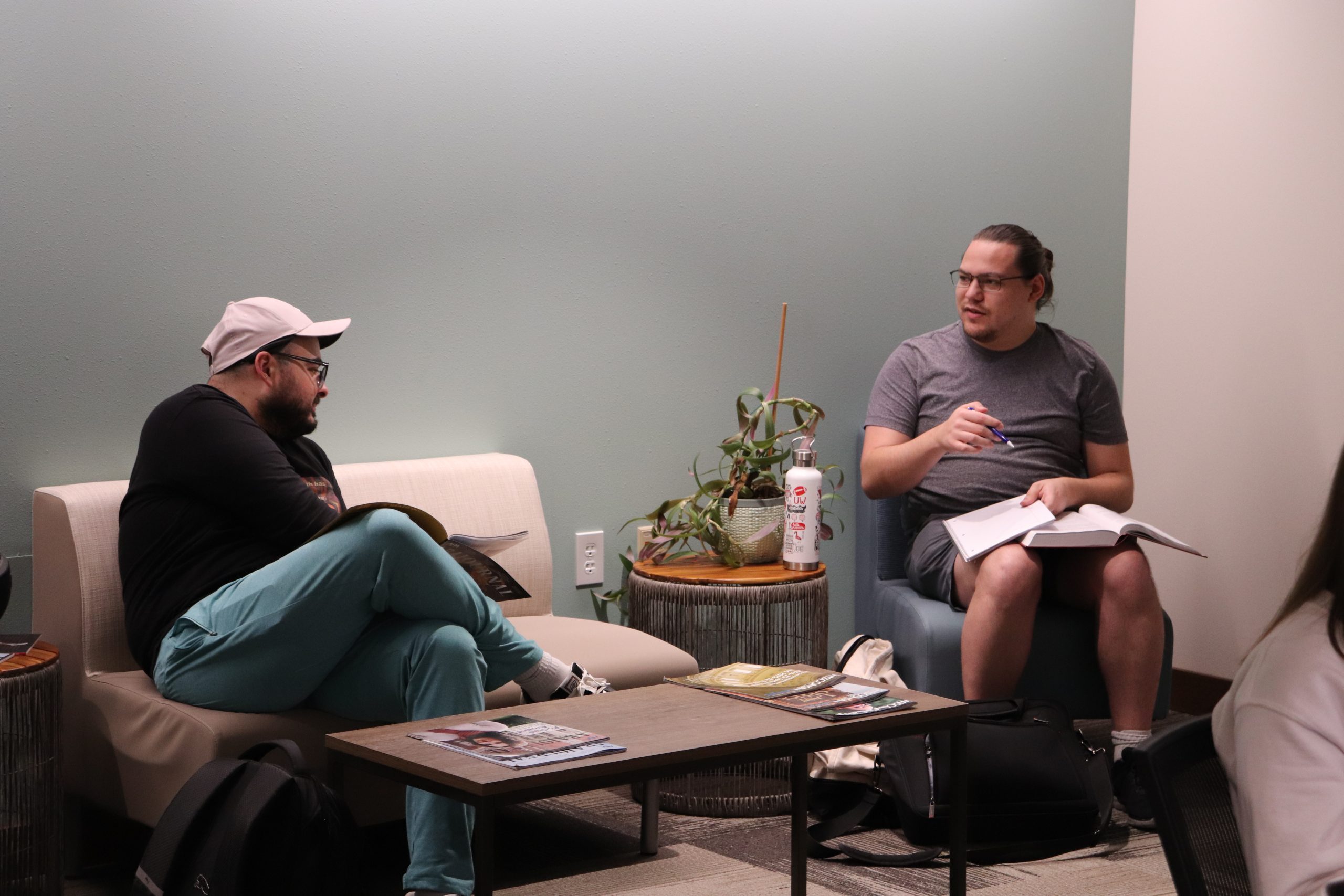
The new LAAW suite in 4370 is welcoming to students, who often frequent the space before or after office hours or even use it for study groups.
Faculty regularly present at national conferences and contribute to scholarship on legal pedagogy. They’ve been invited to lead writing workshops for law firms and have developed several tools for both students and other legal writing instructors, such as the Citation Bootcamp (a video series introducing law students to legal citation) and the Legal Hypotheticals Archive (a searchable database summarizing a range of hypothetical assignments that have been used successfully in legal writing courses).


Revamped LAAW Suite
Until last year, the LAAW faculty were scattered across four floors of the Law building. Now, thanks to Dean Dan Tokaji’s vision and support, they are all together in the newly built suite 4370.
“This is the first time in the almost 30 years I’ve taught here that all of the legal writing faculty are in the same area,” Peterson said. “Being in the same space allows us to talk more often so that we can communicate teaching ideas, ask each other questions about how we teach particular concepts and, in the end, I think this open communication makes us better teachers.”
The new space, in many ways, represents the Law School’s commitment to continue investing in legal writing. It advances the strengths the program has developed over the past 15 years: a team of full-time faculty passionate about teaching legal writing, who welcome and connect with students and guide them to become lawyers with the skills to succeed in any circumstances.
The efforts of the faculty don’t go unnoticed by the students.
“What stands out to me is how the whole of the LAAW faculty managed to prepare students for a variety of different employer expectations while also embodying the general theme of the department and profession as a whole: There is no one way to be a successful legal writer,” said Bartz.
Fostering the Next Generation of Legal Scholars
The first few weeks of law school can be intimidating and overwhelming for students.
“Students for the most part have no idea what they are doing and are looking for ways to stay grounded amidst the whirlwind,” said Oliver.
Oftentimes, they seek this grounding from their professors.
LAAW courses are among the first classes law students take, and their smaller sections make their professors particularly accessible. Oliver remembered visiting her LAAW professor when she was feeling particularly lost.
“While her office was a place to discuss Boolean searches, cases for upcoming assignments and legal memo structure, it was also a place I could let my guard down and be honest about difficulties,” she recalled.
Legal writing classes can also help students organize their thoughts and build confidence in their skills. Oliver compared the process to stained-glass artisanship.
“Just as a stained-glass window comes together piece by piece as the artist solders glass together, each section of a legal memo or brief comes together as the writer strings sentence after sentence,” she said. “As I read through my final memo for LAAW I, I could see each sentence fitting snugly together as if I was soldering glass. It was quite amazing.”
From the Beginning
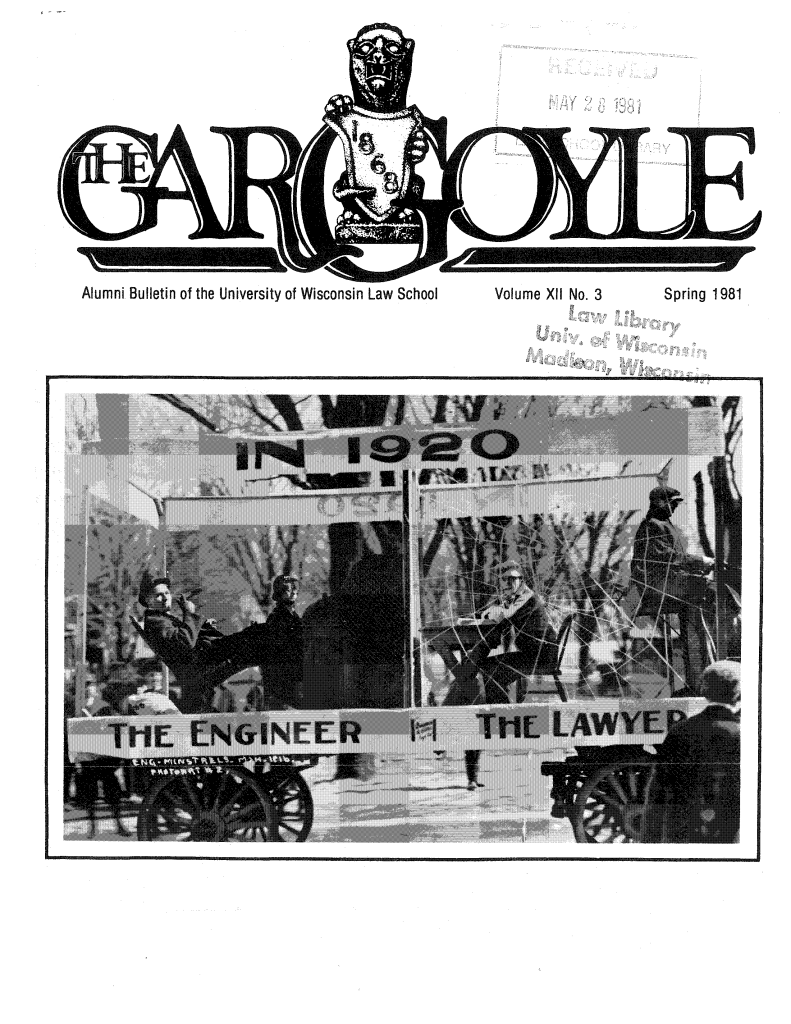
A 1981 issue of the Gargoyle (Vol. 12, No. 3) attributes the first semblance of a required legal writing program to a one-credit course in “Briefmaking,” listed in a 1914-15 academic year Law School Bulletin. The course was renamed to “Legal Bibliography” in 1921-22 and remained relatively unchanged until the early ’50s.
In 1954, the course was split into two semesters for a total of two credits, and with the names “Legal Writing (a)” and “Legal Writing (b),” with a new emphasis on legal analysis and problem solving. These were then fused into the single spring semester three credit course, “Legal Writing,” in 1971, but with the understanding that the fall semester would still include legal bibliography exercises.
At this point, the course was taught by second- and third-year law students, and it was one of the few law courses with letter grades, often seen as less rigorous than other courses, which received number grades.
In 1994, the course was once again split into two (Legal Research and Writing I and II), but now with adjunct professors teaching writing and library staff teaching research. Additionally, the courses were graded like other substantive classes, signaling their growing importance.