J. Willard Hurst Summer Institute: ‘Thrilling’ Tradition for Legal History Scholars

Every two years in June, the “spirit of the Hurst Institute” makes a lasting impact on 12 early career legal history scholars from around the world.
The two-week seminar held at University of Wisconsin Law School is guided by James Willard Hurst’s commitment to mentoring and fostering an intellectual community through generous, rigorous, critical, detailed and engaged feedback.
Twelve fellows regarded as the future of the field of legal history engage in spirited discussions with each other as well as visiting senior scholars.
The summer institute is named for Hurst (1910- 1997), generally recognized as the father of modern American legal history. He joined the UW Law faculty in 1937, taught for more than four decades and published over three dozen books and scholarly articles. Much like his students did, Hurst fellows walk away with invaluable experience because they are given the opportunity to receive feedback from a cohort of academics.
Michelle McKinley, one of the co-conveners for the 13th institute this summer, praised this intense, beneficial process. “It is actually very hard to get this kind of one-on-one invested feedback beyond one’s dissertation committee,” said McKinley, Bernard B. Kliks Professor of Law at the University of Oregon. “Fellows are basically getting 14 committee members, peer reviewers, journal editors and manuscript editors all at once in the field of legal history that is far beyond one’s own disciplinary expertise.”
Additionally, the feedback comes from a wider-than-usual academic community. Many legal scholars often only discuss their work with peers in the same or a similar field of expertise. Feedback from peers across the academic community can open fellows’ eyes to new perspectives they hadn’t considered before.
John Fabian Witt, also a 2025 co-convener, believes these diverse perspectives are essential for full comprehension of the law.
“In the history of the law, different disciplinary perspectives have been complementary rather than rivalrous,” said Witt, Allen H. Duffy Class of 1960 Professor of Law at Yale Law School. “Law is such a complicated, multifarious phenomenon that it takes all kinds to help us make sense of it.”
Each of this year’s fellows came to the institute looking to improve themselves and their work. The opportunities available at the Hurst Institute drew in many promising early career scholars.
Like Marco Basile, who came to the institute during a transitional period in his career.
Marco Basile: Preparing for the Future
This fall, Basile joined the faculty at Boston College Law School as an assistant professor. To prepare for this new role, he wanted to step back and think critically about the methods, objectives and responsibilities of legal history.
The former Alexander Fellow at New York University School of Law is a historian who researches U.S. public law in a global context; his work has been published in the Virginia Law Review and Harvard Law Review, among others.
Before entering academia, Basile worked as a litigator and clerked for Justice Ruth Bader Ginsburg on the U.S. Supreme Court as well as two federal appeals court judges.
Basile said he was grateful for his peers’ “challenging questions and constructive feedback” during the institute. This was all over the course of more than two hours of focusing on his draft paper on legal interpretation in the early United States.
Additionally, Basile was able to make important connections with the other fellows. “One of the best parts of the program was being folded into a new cohort of Hurst Fellows who can support each other as we advance in our careers,” he said. “Getting to know the other fellows and learning from their work was one of the true highlights of the experience.”
Du Fei, an assistant professor at the University of Oklahoma, agreed.
Du Fei: Looking for New Perspectives
Fei came to the Hurst Institute to broaden his understanding of history outside of his own regional field. He studies early modern and modern South Asia, focusing on the history of gender and Islam in South Asia’s global connections.
The discussion experience he had with other scholars was extremely rewarding.
“It is always eye-opening to engage in this kind of boundary-crossing conversation,” Fei said.
Some of the most important discussions revolved around a chapter in his current project, “Local Women, Global Histories? Gendering Economic Life, Law, and Islam in Early Modern Transregional India.”
It made him rethink the division of the intellectual history of jurisprudence and the social history of legal practices — something he wished to expand upon throughout his book.
The experience was equally eye-opening for Britney Wilson.
Britney Wilson: Seeing The Law From a Different Angle
Unlike many of her colleagues, Wilson does not have a background in legal history. Trained as a lawyer, she came to the institute to “learn how to do history,” though during her time she learned that there is no set way to do that.
A professor at New York Law School, Wilson is the founding director of the Civil Rights and Disability Justice Clinic. She worked previously as a staff attorney at the National Center for Law and Economic Justice, where she litigated federal civil rights class action litigation tied to excessive fines and fees, discriminatory policing and disability rights.
Before that, she litigated a wide range of complex federal cases concerning racial justice issues at the national office of the American Civil Liberties Union’s Racial Justice Program and at the Center for Constitutional Rights.
“I very much think like a lawyer, and what the Hurst Institute has been helpful in getting me to see is that the law is much more than what I might traditionally think of as the law,” Wilson said. “The law is also customs, and it is constantly being shaped and contested; these are things I intuitively know, but it can be easy to forget when you are practicing on a regular basis.”
Wilson’s experience at the institute has not only allowed her to see the law from a different perspective, but it has also reintroduced her to her humanities side.
“I am a writer and my undergraduate degree is in English and so I think this experience is sort of reintroducing me to those concepts in terms of how I think about the law,” she said.
It’s “thrilling” to see how the program shapes new generations of legal historians who find a sense of community during an intensive, demanding two weeks in Madison, said Mitra Sharafi, Evjue-Bascom Professor of Law at UW Law School.
Mitra Sharafi: ‘Always a good thing’
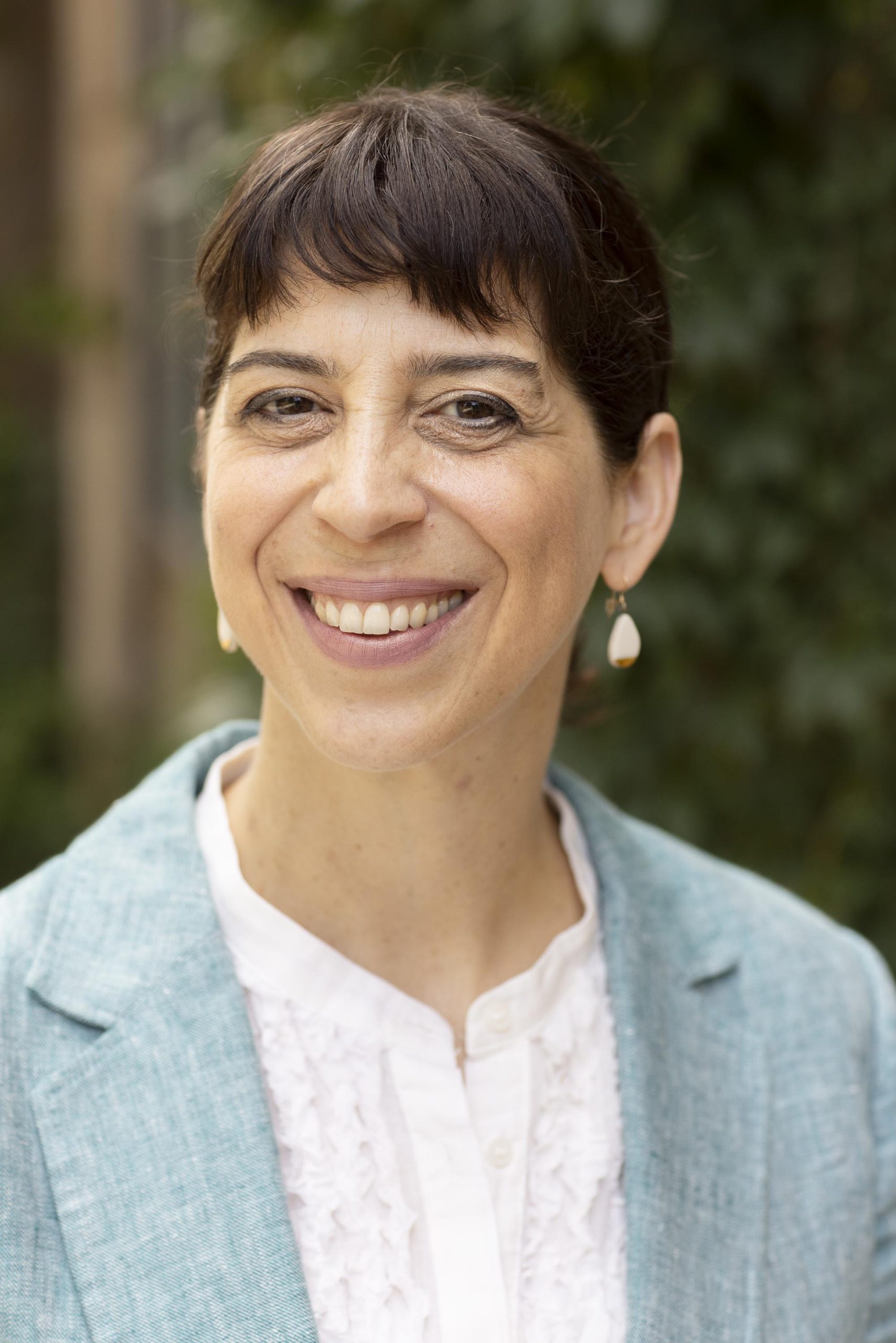
Sharafi has been involved with the Hurst Institute most years since 2005, when she was a fellow herself. In 2017 and 2019, she was the convener.
This November, Sharafi will become president of the American Society for Legal History (ASLH), which sponsors the Institute.
For herself, the panoramic view of the field of legal history allows her to catch a glimpse of the on-theground work of scholars researching many different times and places.
“I love it when two Hurst fellows working on completely different times and places — 17th Century Qing-dynasty China and the 20th Century U.S., for instance — realize that they are working on the same theme like judicial discretion,” Sharafi said.
“When this happens, fellows emerge with a new perspective on what fields and scholars they are in conversation with — and see their research from a broader and more comparative perspective. This is always a good thing, as it helps fellows better communicate their research findings to people outside of their sub-field.”
By Kate Shucha