Ann Walsh Bradley ’76: Promoting Justice for All
One year after steppingaway from four decades on the bench, Justice Ann Walsh Bradley ’76 still starts her day the same way: with a morning meditation and writing.
Bradley focuses on four things: health, relationships, joy and fun.
“It anchors me,” she said.
In 2025, Bradley retired from the Wisconsin Supreme Court as the fifth longest serving justice.
Elected in 1995 after 10 years as a circuit court judge, she was the first woman justice in Wisconsin history to be elected as a non-incumbent and subsequently won two additional statewide elections.
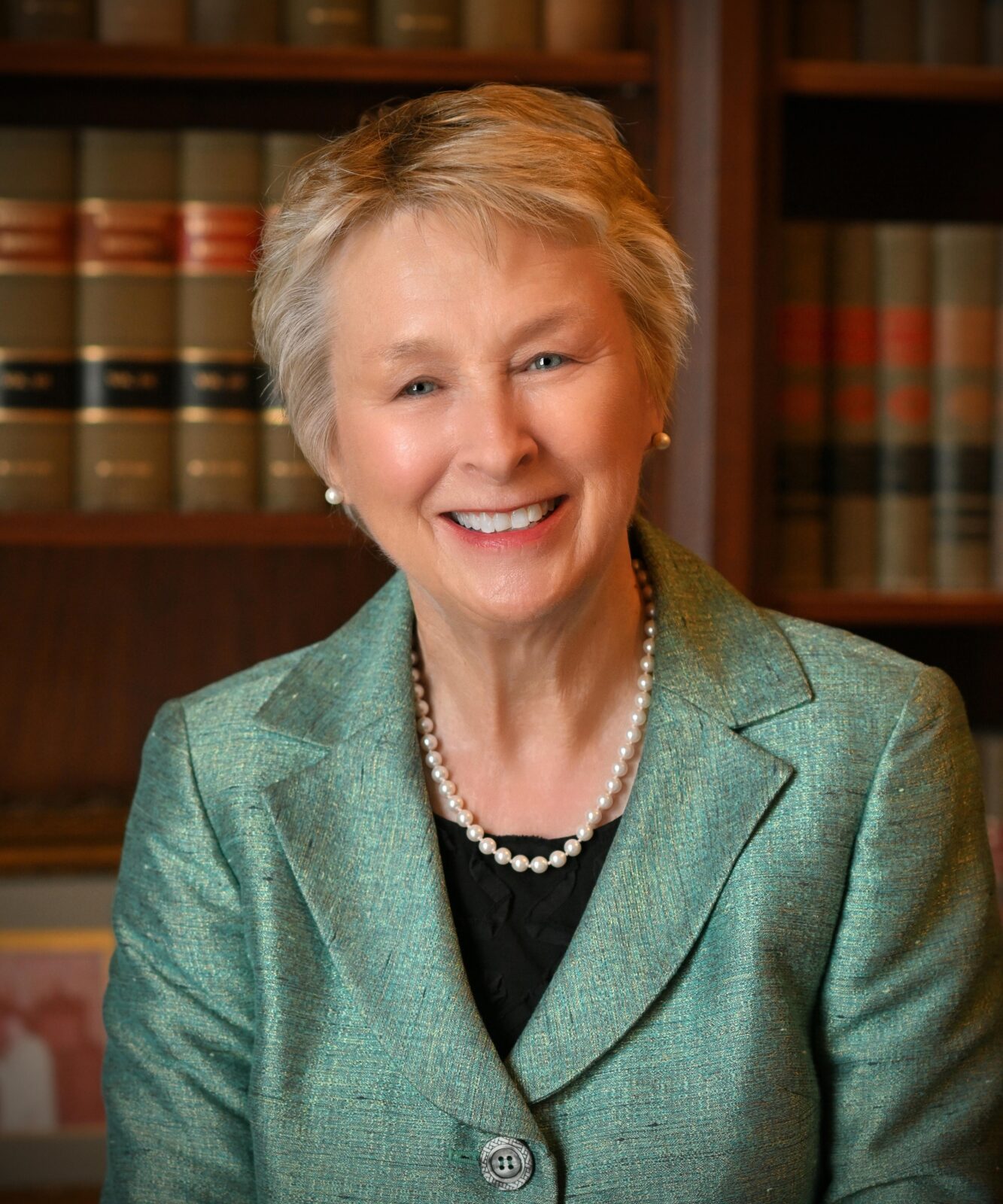
The 76-year-old remains quite busy with travel, family get-togethers, public speaking and work as the chair of the board of trustees of the International Association of Women Judges (IAWJ).
Retirement feels “wonderful,” Bradley said, because she does not feel as much weight on her shoulders.
“Being a justice of the Wisconsin Supreme Court is an honor and a huge responsibility,” she said. “I’m the type of person that takes that responsibility very seriously. So, it’s fun to be able to walk with a little lighter step.”
While Bradley has not had much quiet reflection time yet, she looks back with immense pride that Wisconsin’s top court is so highly regarded nationally.
“I worked tirelessly to have the kind of court that we now have,” she said. “Being able to lead it as chief justice in the last few months was such a capstone and honor — and in some ways the fruition of a dream come true.”
She described the court as smart individuals working together as a “coalition of talent” — dedicated to the rule of law and earning the trust of the people.
Bradley, who was raised in Richland Center, did not come from a family of lawyers. She sought her law degree after teaching high school because she was driven by a “sense of purpose” and knew her degree could “bring about justice in the lives of people.”
At University of Wisconsin Law School, she met her husband, Mark. Two of her four children followed in their footsteps as Law Badgers, and one became a paralegal. So “the law has been really a driving force for our family.”
PQ: “I worked tirelessly to have the kind of court that we now have. Being able to lead it as chief justice in the last few months was such a capstone and honor — and in some ways the fruition of a dream come true.”
Bradley is grateful for all that her alma mater has given her personally and professionally. And she believes strongly in its commitment to the Wisconsin Idea, the concept that education should influence people’s lives beyond the boundaries of the classroom. That approach to public service has driven her career and still fuels her international work.
Bradley hopes law students and aspiring professionals understand that “having a law degree is more than a piece of paper.”
It comes with a responsibility, she said.
“Lawyers are problem solvers, and heaven knows we have a number of problems to solve,” she continued. “They are uniquely trained to be leaders in their community, in their states, in their organizations.”