Where Advocacy Begins
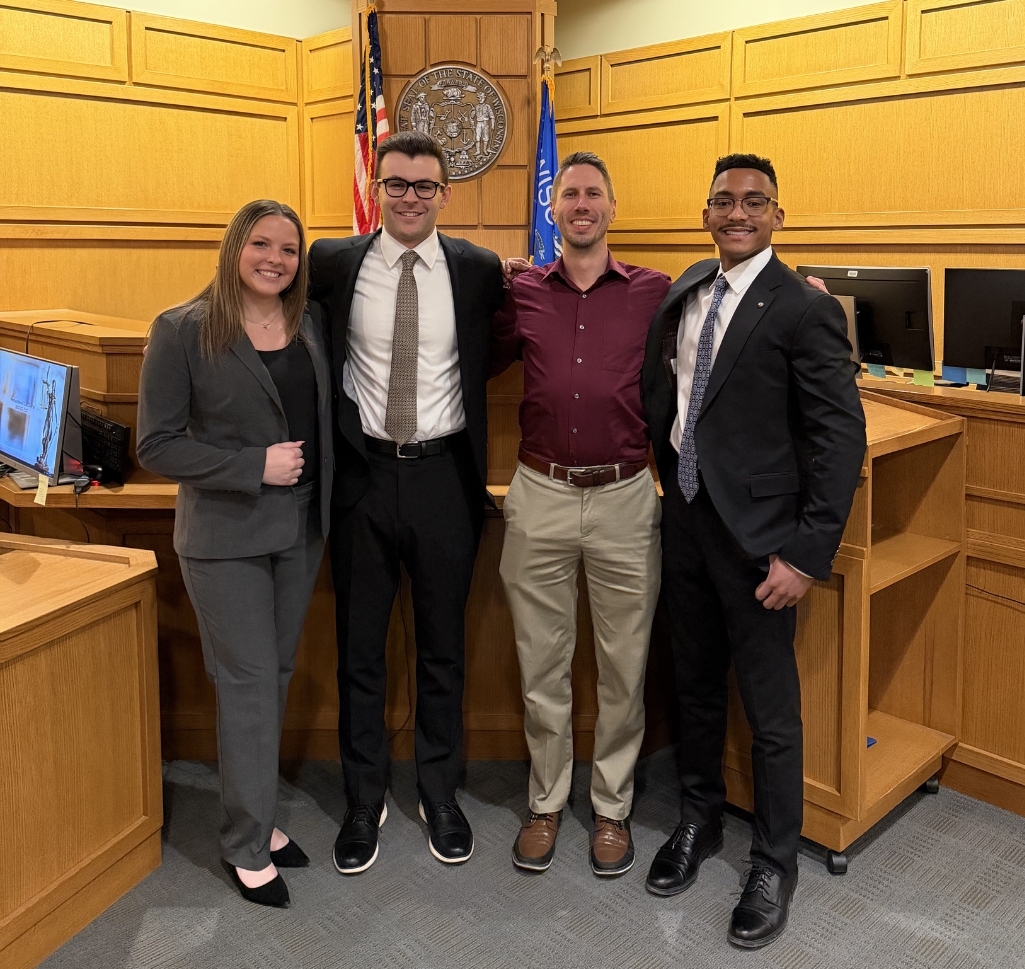
In January, University of Wisconsin Law School hosted the first round of the 2026 Texas Young Lawyers Association (TYLA) Region 12 National Trial Competition, a competitive trial advocacy program.
The event attracted people from all over Madison to serve as witnesses. Additionally, numerous prominent judges and attorneys, including Hon. Frank Remington ’84, Hon. William Conley ’82, Hon. Brian Blanchard and Hon. Scott Horne ’79 joined the competition as judges.
For the student advocates competing, it was the culmination of over a month of preparation, being coached by attorney coaches Morgan Stippel ’18 and Matt Van Keulen ’11 and spending multiple days each week practicing and memorizing everything for what may have been the most salient and future-shaping experience of their time in law school.
The Competition
The TYLA mock trial competition is open to all law schools in each region, regardless of size, with over 150 participating across the country. Each trial has two teams of three student advocates who perform direct- and cross-examinations, opening and closing arguments, argue motions in limine and make objections.
Teams alternate between plaintiff and defense roles and are evaluated by three judges — one presiding and two scoring — who are practicing attorneys or judges themselves. Each student is scored on their performance using a standardized rubric, and the stakes are high: The top eight teams in the region face off until the top two advance to the national competition in Texas, where they compete with the top teams from other regions for a $10,000 prize.
“So much of being a lawyer is making mistakes and learning from them. I’m so glad I was given the space to make mistakes in the mock trial competition, and the memories of those mistakes have been as important to my growth as an attorney as anything.”
“The competition replicates a real trial as closely as possible, but there are some very real differences,” said Kim Peterson, director of UW Law’s Mock Trial Program.
Unlike most other mock trials, TYLA competition witnesses are provided by the hosting school rather than the student teams.
“This requires the student advocate to prepare the witness 15 minutes prior to trial,” Peterson said. “The witness may not be as prepared as the advocate would like, so the advocate has to be ready to refresh the witness’s recollection and rehabilitate the witness if they make a mistake.”
Student Experience
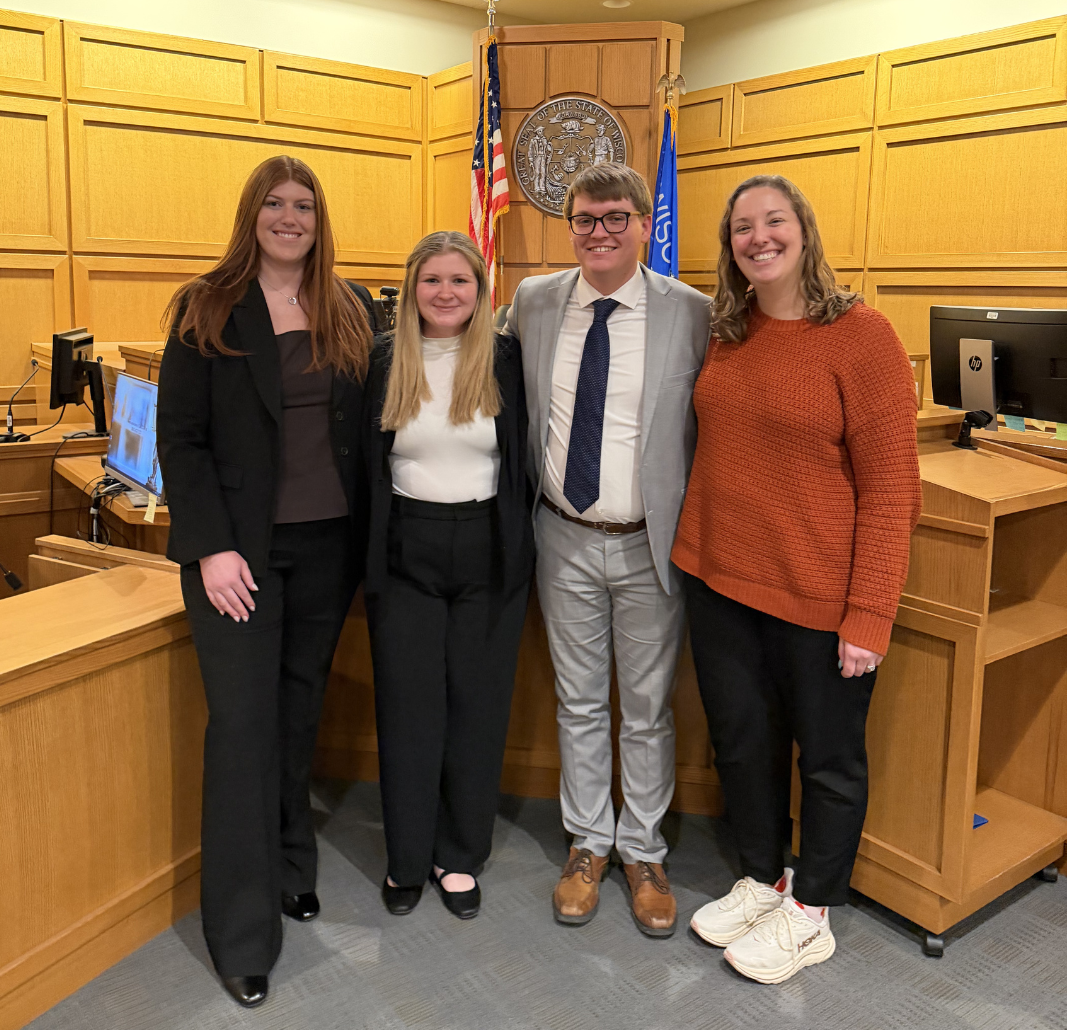
Since its inception nearly 20 years ago, the UW Law Mock Trial Program has been an invaluable test drive for students considering a career as trial attorneys. Peterson said that in her 10 years as the program director, she witnessed many students discover their calling through the experience.
“We get a lot of students who feel mediocre or feel like they’re not super great at law school, but they turn out to be really good advocates because they’re really good with people, really good at speaking and thinking on their feet,” Peterson said. “I often tell students, ‘You don’t have to be a top 10% student to be a magnificent advocate.'”
Cameron Davies ’24, assistant district attorney at the Dane County District Attorney’s Office, attributes much of his career success to his experience in mock trial.
“I’m in a courtroom, on-the-record every single day of the week,” he said. “I need to be able to direct- and cross-examine witnesses. I need to be able to speak clearly to the court. I need to be able to persuade and argue, and I need to know the rules of evidence like the back of my hand. Mock trial, and especially the TYLA competition, taught me how to do all those things.”
Many mock trial students go on to become public defenders or prosecutors, but the skills developed during the competition extend beyond the courtroom. Students practice effective communication, including being clear, concise and engaging while using inflection and body language to hold attention.
These skills will continue to be useful during job interviews, client meetings and everyday interactions in their professional and personal lives. Above all else, the competition helps students develop the confidence they will carry into real courtrooms.
“So much of being a lawyer is making mistakes and learning from them,” said Davies. “I’m so glad I was given the space to make mistakes in the mock trial competition, and the memories of those mistakes have been as important to my growth as an attorney as anything.”